
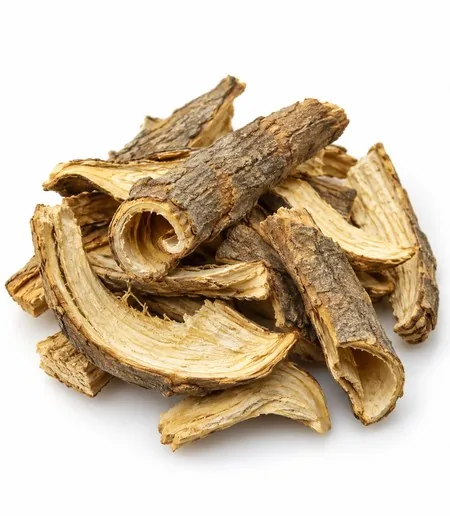
Dittany Root Bark
Dittany Root Bark (백선, 白鮮) is recorded in the Donguibogam as a heat-clearing, dampness-drying herb. Its nature is cold and its taste bitter, salty, associated with the Spleen, Stomach, Bladder meridians. Traditional uses recorded in the text include clears heat-toxin, dries dampness, stops itching, resolves jaundice. Caution: Cold and drying; not suited to cold-deficiency conditions.
Overview
Dittany root bark's Korean folk name literally translates to "white goat-smell," a nickname the Donguibogam explains directly: the root's scent was said to resemble a goat's, which locals turned into its common name even as physicians relied on it for damp, itchy skin conditions and stubborn jaundice.
In the Donguibogam
寶鑑
Traditional uses recorded in the Donguibogam
- Clears heat-toxin
- Dries dampness, stops itching
- Resolves jaundice
- Relieves wind-damp joint pain
Traditional applications recorded in the classical text
- Damp, itchy, oozing skin conditions
- Jaundice
- Wind-damp joint pain with stiffness
- Sores and scabies
Traditional preparation
DonguiHub does not provide dosage guidance.
This describes traditional preparation recorded in the classics, not a recommendation for use today. DonguiHub does not provide dosage guidance — consult a qualified professional before using any herb.
Cautions
Frequently asked questions
Why is dittany's Korean name related to a goat smell?
The Donguibogam explains this directly: the root's scent was said to resemble a goat's, which is how it earned its common folk name, distinct from its formal medicinal name.
What is dittany root bark's main traditional use?
Damp, itchy, oozing skin conditions and jaundice — the Donguibogam lists several named types of jaundice it was used to resolve, alongside wind-damp joint stiffness.
Sources
- 『동의보감』 탕액편, 허준, 1613 (원문) — 한문 원문
- 한의학고전DB (mediclassics.kr) — 원문 및 국역 자료 참조