
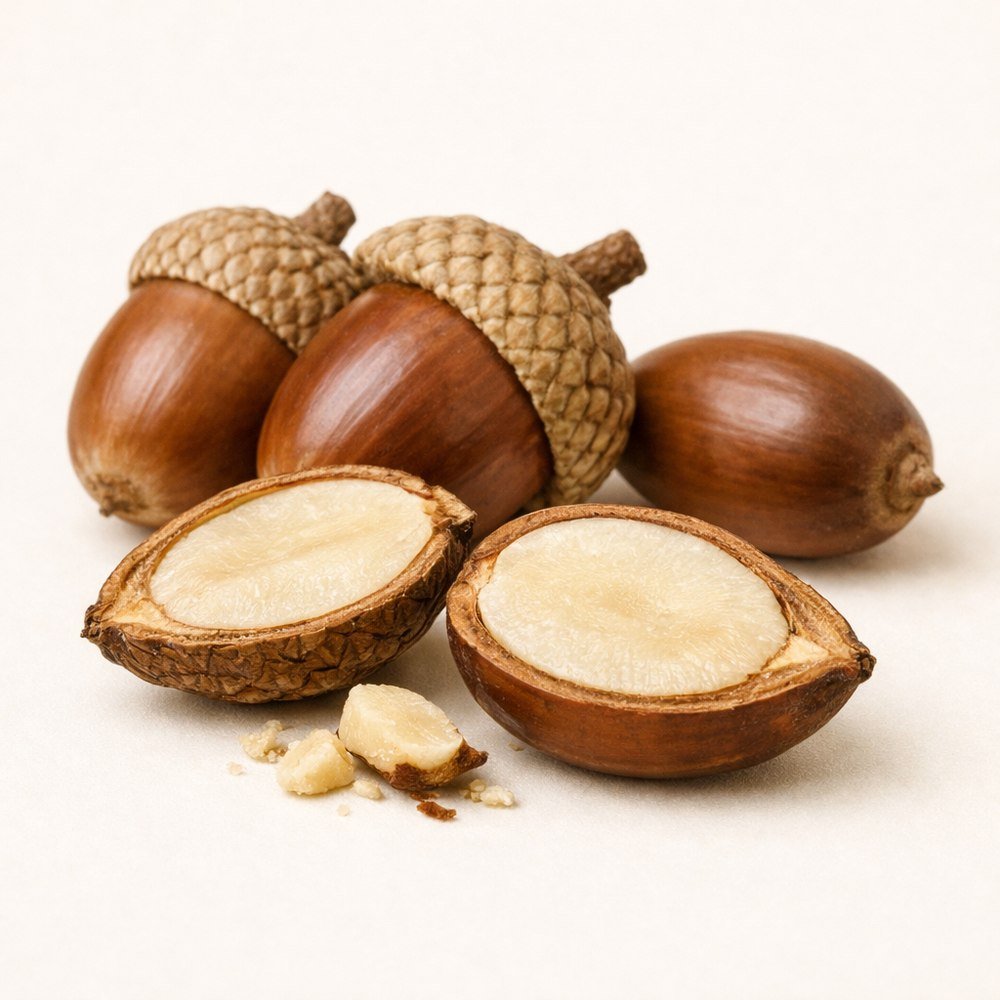
Acorn
Overview
Acorn is best known in Korea today as dotori-muk, the jelly made from its starch, but the Donguibogam records it first as a food-medicine for the digestive tract — thickening the intestines and stopping diarrhea. The text notes several oak species share the name and that acorns with a cap (橡殼) were also kept as a separate remedy.
In the Donguibogam
寶鑑
Traditional functions
- Astringes the intestines, stops diarrhea
- Strengthens the digestive tract
- Nourishes the body
Traditional applications
- Chronic or lingering diarrhea
- Weak digestion needing gentle astringing
- Traditional famine food valued for its nutrition
Traditional preparation
Traditionally eaten as processed flour or jelly (dotori-muk) after leaching out the tannins; decoction of the dried nut 8–16g.
Cautions
Frequently asked questions
Is this the same acorn used to make dotori-muk?
Yes — the Donguibogam entry (橡實) covers the same acorn still processed into starch jelly today, and already records it as a food eaten to "fill hunger and guard against famine."
What did the Donguibogam say acorns were good for?
Primarily diarrhea: the text describes them as thickening the intestines and stomach and astringing the bowels to stop loose stool, alongside general nourishment.
Sources
- 동의보감 탕액편 (원문) — 한문 원문 발췌 — 한의학고전DB 탕액편 대조 검증 완료 (DATA-001)
- 한의학고전DB (mediclassics.kr) — 국역 참조 후 자체 재서술 (LEGAL-001)