
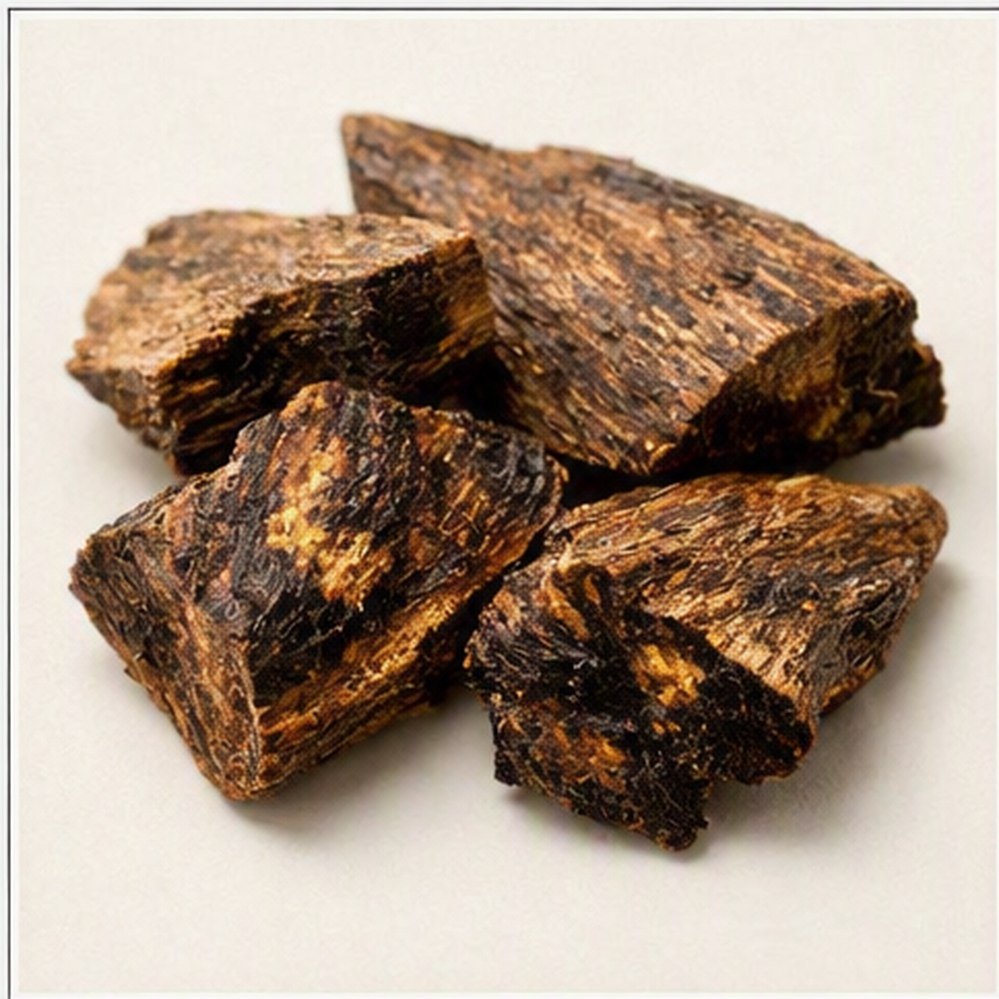
Agarwood
침향 (沈香) · Aquilaria agallocha Roxb.
Qi-regulating, kidney-warming herb
Hot
Pungent (some sources: bitter)
Spleen, Stomach, Kidney
NatureHot
TastePungent (some sources: bitter)
MeridiansSpleen, Stomach, Kidney
Part usedResinous heartwood
FamilyThymelaeaceae
CategoryQi-regulating, kidney-warming herb
Find by concern: Chest painNumbness in hands and feet
Overview
Agarwood is prized precisely because it does not form naturally — the Donguibogam explains that southern gatherers would cut a wound into the tree and let years of rainwater seep in before the wood resinified enough to sink in water, the very trait that gives "chimhyang" (sinking fragrance) its name.
In the Donguibogam
東醫
寶鑑
寶鑑
性熱, 味辛一云苦, 無毒. 主風水毒腫, 去惡氣, 止心腹痛, 益精壯陽. 治冷風麻痺, 霍亂吐瀉轉筋.
Source: Donguibogam, Tangaek-pyeon (Herbology volume)
TranslationIts nature is hot, its taste pungent (some say bitter), and it is non-toxic. It mainly treats wind-water toxic swelling, removes malign qi, stops chest-abdomen pain, and boosts essence and strengthens yang. It treats cold-wind numbness and cholera-type vomiting and diarrhea with cramping.
Traditional functions
- Descends rebellious qi
- Warms the kidney, strengthens yang
- Relieves pain
- Dispels wind-water swelling
Traditional applications
- Cold-type chest or abdominal pain
- Kidney-yang weakness
- Cold-wind numbness
- Cholera-type vomiting and diarrhea with cramping
Traditional preparation
1–4g, ground fine for pill and powder use, or added last to a decoction.
Cautions
Caution: Hot in nature and traditionally used in small, finely ground amounts; not suited to heat-excess conditions. Genuine agarwood varies greatly in quality and origin. Consult a professional.
Advertisement
Frequently asked questions
Why is agarwood called "sinking fragrance" (chimhyang)?
Because genuine agarwood is dense enough with resin to sink in water — the Donguibogam explains that pieces which merely float, rather than sink, were graded as a lesser variety.
How was agarwood traditionally obtained?
The Donguibogam describes cutting a wound into the tree and letting years of rainwater seep in, allowing the wood to slowly resinify before harvest — agarwood does not occur without this process.
Sources
- 동의보감 탕액편 (원문) — 한문 원문 발췌 — 한의학고전DB 탕액편 대조 검증 완료 (DATA-001)
- 한의학고전DB (mediclassics.kr) — 국역 참조 후 자체 재서술 (LEGAL-001)
DonguiHub is an educational and informational platform about the history and tradition of Korean medicine. It does not provide medical advice, diagnosis, or treatment. Always consult a qualified healthcare professional about health conditions and before using any herb.