
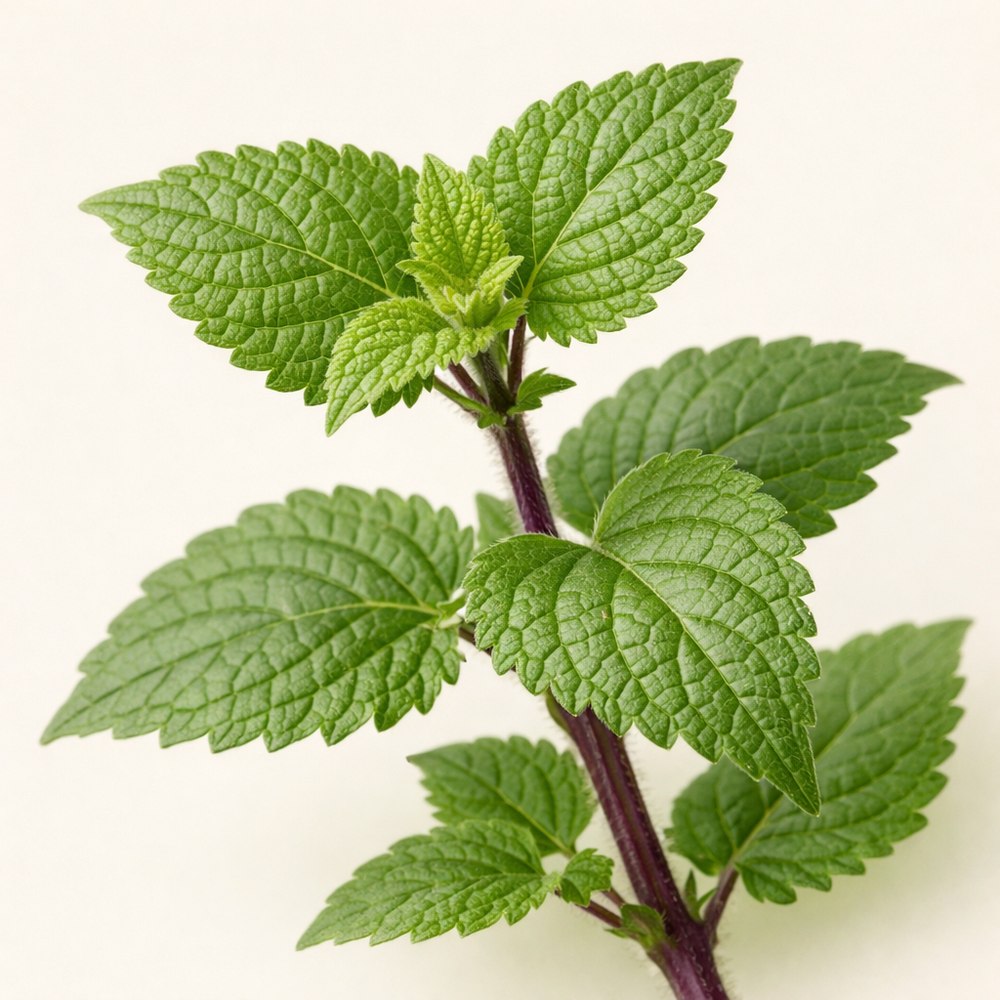
Korean Mint
Overview
Korean mint carries a fragrance the Donguibogam itself notes was once blended into incense, and that same aromatic quality is exactly what makes it useful against the queasy, heavy-headed nausea of summer dampness. It is recorded as chief among herbs for stomach reversal — vomiting that will not settle.
In the Donguibogam
寶鑑
Traditional functions
- Transforms dampness, awakens the spleen
- Stops vomiting
- Releases summer-heat with dampness
- Dispels foul, turbid qi
Traditional applications
- Nausea and vomiting from dampness
- Summer-heat fatigue with heavy head
- Acute vomiting and diarrhea together
- Poor appetite with a sticky, sluggish feeling
Traditional preparation
Decoction 4–10g, added near the end of boiling to preserve its aromatics; a core ingredient of Hyanggeoksan-style summer formulas.
Cautions
Frequently asked questions
Is Korean mint related to incense?
The Donguibogam notes its dried leaves were historically blended into incense for their fragrance — the same aromatic compounds are what traditional medicine credits with cutting through damp, queasy stagnation in the stomach.
Why is it linked to summer illness specifically?
Classical medicine associated summer with excess dampness and heat combining to cause heavy-headedness, nausea, and fatigue — conditions this aromatic, damp-transforming herb was specifically recorded to address.
Sources
- 동의보감 탕액편 (원문) — 한문 원문 발췌 — 한의학고전DB 탕액편 대조 검증 완료 (DATA-001)
- 한의학고전DB (mediclassics.kr) — 국역 참조 후 자체 재서술 (LEGAL-001)