
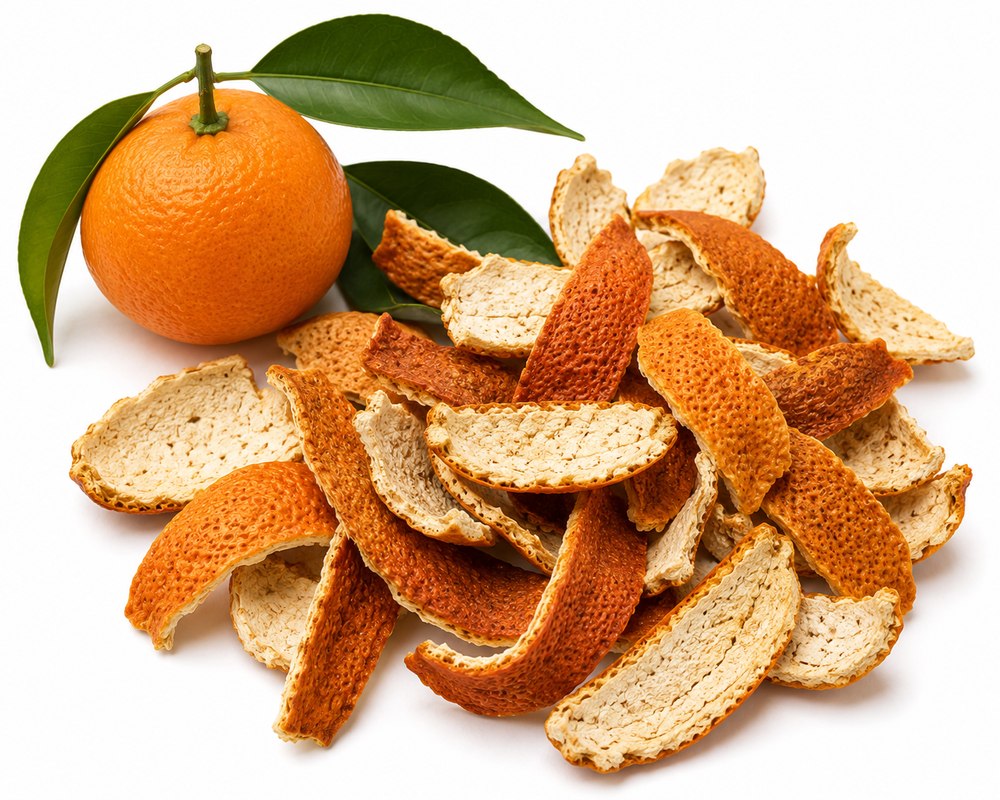
Aged Tangerine Peel
Overview
Tangerine peel is a kitchen-cabinet remedy for stuck qi and phlegm, and the Donguibogam records that Korea's own supply came from Jeju island. The longer the peel is aged, the more prized it becomes — fresh peel is called 'red peel,' while the aged form is 'chen pi,' aged peel, the name still used today.
In the Donguibogam
寶鑑
Traditional uses recorded in the Donguibogam
- Regulates qi, relieves stagnation
- Dries dampness, resolves phlegm
- Strengthens the spleen and stomach
- Stops nausea
Traditional applications recorded in the classical text
- Bloating and chest tightness
- Cough with phlegm
- Poor appetite
- Nausea
Traditional preparation
The core of Yijin-tang (Two-Cured Decoction) with poria and licorice, and part of Yukgunja-tang.
This describes traditional preparation recorded in the classics, not a recommendation for use today. DonguiHub does not provide dosage guidance — consult a qualified professional before using any herb.
Cautions
Frequently asked questions
Why does the Donguibogam mention Jeju island?
The text notes that among Korean regions, only Jeju produced citrus fruit — reflecting the island's uniquely warm climate, which remains true today as Korea's main citrus-growing region.
What is the difference between fresh and aged peel?
Freshly dried peel is called 'red peel' and is considered stronger and more dispersing; peel aged for years becomes 'chen pi' (aged peel), valued as milder and better for long-term digestive support — the origin of the herb's common name.
Sources
- 『동의보감』 탕액편, 허준, 1613 (원문) — 한문 원문
- 한의학고전DB (mediclassics.kr) — 원문 및 국역 자료 참조