
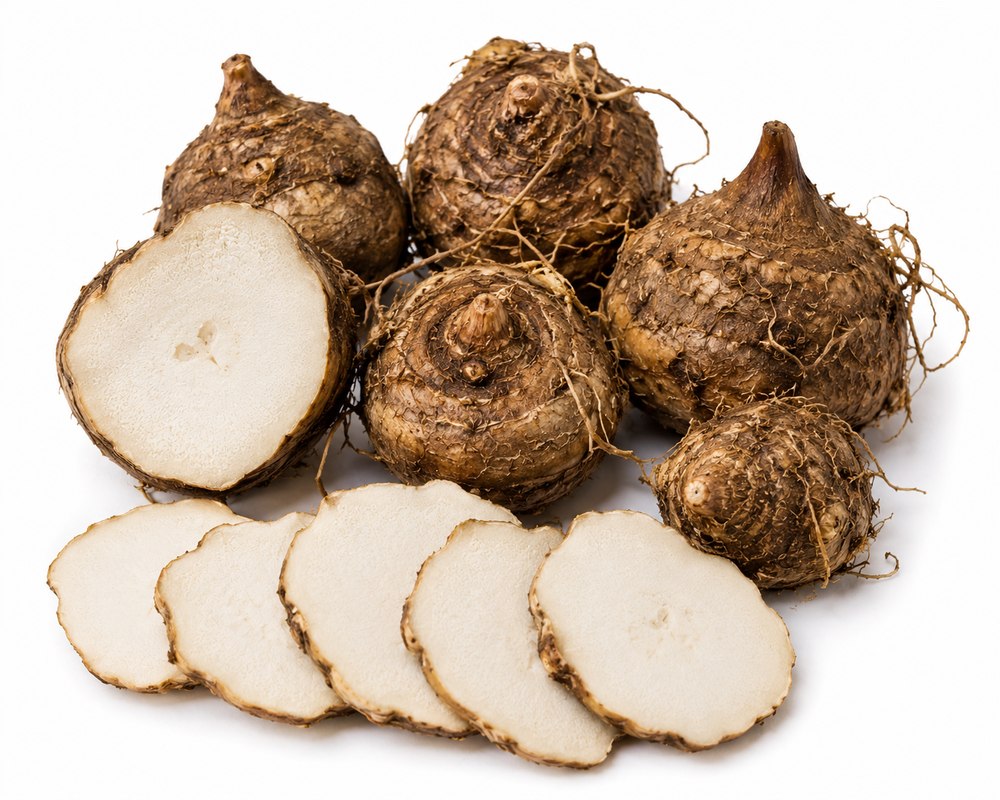
Pinellia Rhizome
Overview
Pinellia is one of the most important phlegm-resolving herbs in Korean tradition, but the Donguibogam is explicit that it carries toxicity in its raw form and must always be processed before use. Properly prepared, it is a cornerstone of formulas for cough, nausea, and phlegm congestion.
In the Donguibogam
寶鑑
Traditional uses recorded in the Donguibogam
- Dries dampness, resolves phlegm
- Directs rebellious qi downward, stops vomiting
- Softens hard masses, disperses binding
- Strengthens the spleen and stomach
Traditional applications recorded in the classical text
- Cough with copious phlegm
- Nausea and vomiting
- Chest and epigastric fullness
- Morning sickness (under professional guidance only)
Traditional preparation
Processed form only; central to Yijin-tang alongside tangerine peel and poria.
This describes traditional preparation recorded in the classics, not a recommendation for use today. DonguiHub does not provide dosage guidance — consult a qualified professional before using any herb.
Cautions
Frequently asked questions
Why is raw Pinellia dangerous?
The Donguibogam itself notes Pinellia 'has toxicity' in its raw state — it can irritate the throat and mouth severely. Traditional processing (soaking, boiling with ginger juice, and drying) removes this toxicity, which is why only processed Pinellia is ever used medicinally.
Is Pinellia safe in pregnancy?
No — it is traditionally contraindicated in pregnancy due to its descending, phlegm-moving action. Any use during pregnancy requires direct professional supervision.
Sources
- 『동의보감』 탕액편, 허준, 1613 (원문) — 한문 원문
- 한의학고전DB (mediclassics.kr) — 원문 및 국역 자료 참조