
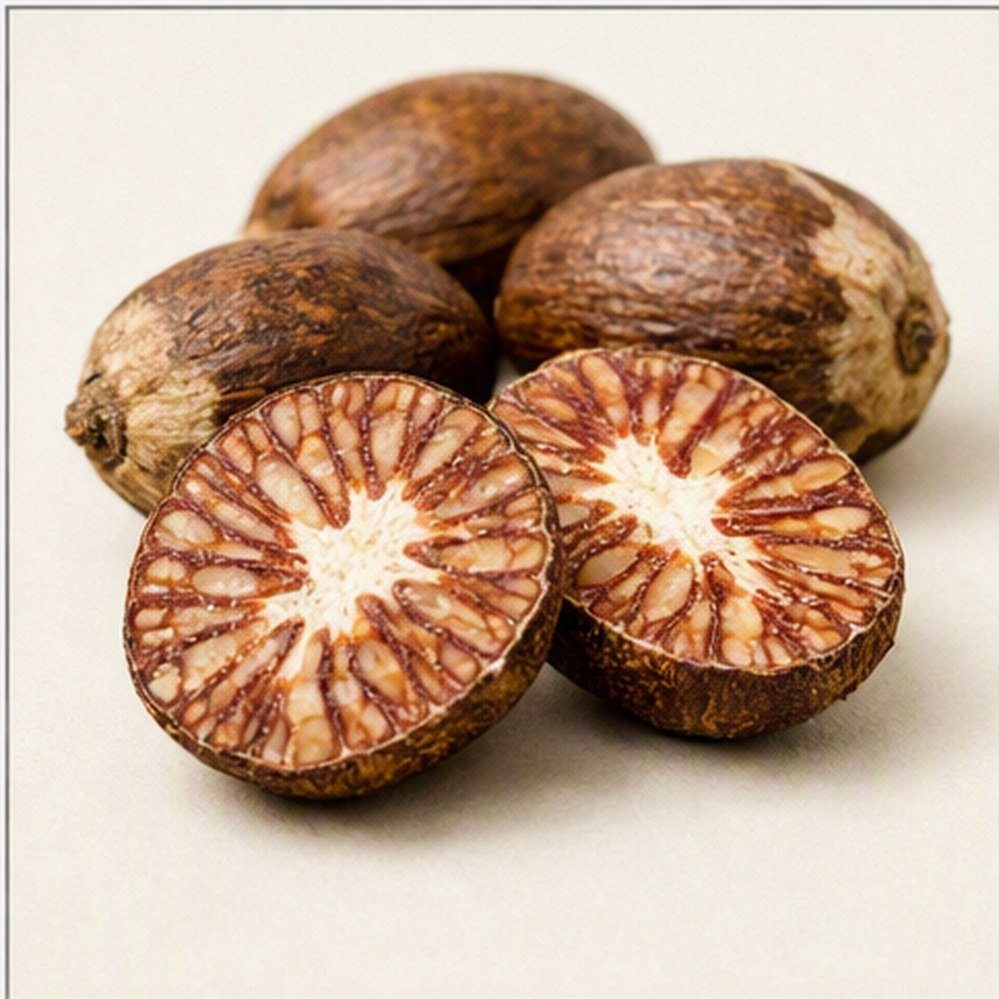
Areca Nut
Overview
Areca nut, the Donguibogam notes, was eaten in southern regions the way fruit is eaten elsewhere — locals believed it helped guard against the region's damp, feverish climate. The text carefully distinguishes several grades by size and taste, and separately records the surrounding husk (大腹皮) as its own remedy for swelling and fullness.
In the Donguibogam
寶鑑
Traditional functions
- Moves qi broadly
- Expels dampness and water swelling
- Aids digestion, relieves fullness
- Breaks up stagnation
Traditional applications
- Abdominal or limb swelling
- Fullness and distension after eating
- Water retention with heaviness
- Stagnation-type abdominal masses
Traditional preparation
Decoction 4–12g; used raw for quick action or lightly processed for gentler effect per traditional practice.
Cautions
Frequently asked questions
Did people really eat areca nut like fruit?
According to the Donguibogam, yes — in southern regions it was eaten the way fruit is eaten elsewhere, believed to help guard against the local damp, feverish climate.
Is the husk (daebok-pi) the same medicine as the nut?
No — the Donguibogam records the surrounding husk as a separate sub-entry (大腹皮) with its own focus on swelling and fullness, distinct from the nut itself.
Sources
- 동의보감 탕액편 (원문) — 한문 원문 발췌 — 한의학고전DB 탕액편 대조 검증 완료 (DATA-001)
- 한의학고전DB (mediclassics.kr) — 국역 참조 후 자체 재서술 (LEGAL-001)