
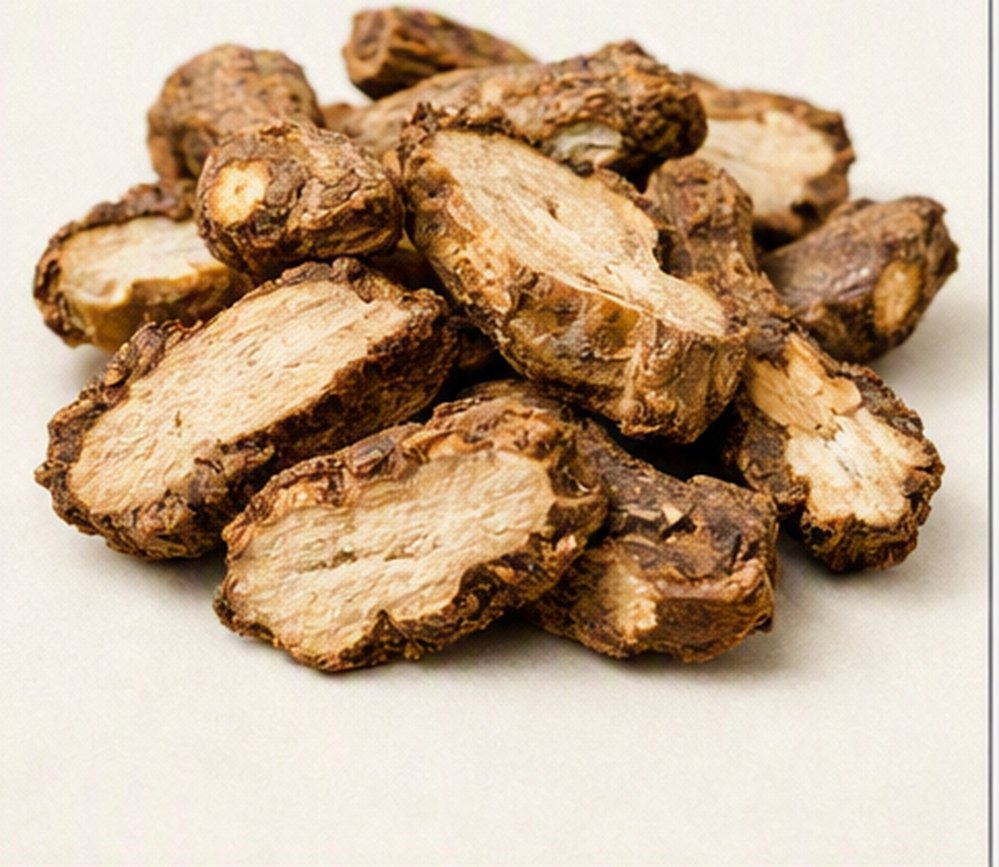
Black Atractylodes Rhizome
Black Atractylodes Rhizome (창출, 蒼朮) is recorded in the Donguibogam as a dampness-drying herb. Its nature is warm and its taste bitter, pungent, associated with the Spleen, Stomach meridians. Traditional uses recorded in the text include dries dampness powerfully, induces sweating, releases the exterior, stops diarrhea and vomiting from dampness. Caution: Stronger and drier than white atractylodes; traditionally avoided in yin-deficiency with dryness or spontaneous sweating, since its potent drying action can worsen these patterns.
Overview
Black atractylodes is white atractylodes's rugged sibling — the Donguibogam itself notes that early materia medica did not distinguish white from black, and that later practice split them by strength: black atractylodes is the more vigorous, drying herb for heavy, damp-laden conditions across the whole body.
In the Donguibogam
寶鑑
Traditional uses recorded in the Donguibogam
- Dries dampness powerfully
- Induces sweating, releases the exterior
- Stops diarrhea and vomiting from dampness
- Reduces edema and distension
Traditional applications recorded in the classical text
- Diarrhea with dampness
- Edema and bloating
- Joint pain from wind-damp
- Heaviness and lethargy in damp climates
Traditional preparation
A core ingredient of Pyeongwi-san (Stomach-Calming Powder) alongside tangerine peel and licorice.
This describes traditional preparation recorded in the classics, not a recommendation for use today. DonguiHub does not provide dosage guidance — consult a qualified professional before using any herb.
Cautions
Frequently asked questions
What is the difference between white and black atractylodes?
The Donguibogam notes early texts did not distinguish them; later practice separated white (milder, more tonifying) from black (stronger, more drying) — both trace to the same genus but are now treated as distinct medicinal species.
What is Pyeongwi-san?
A classical four-herb formula built around black atractylodes for damp-stagnation in the digestive system — bloating, diarrhea, and heaviness — pairing its strong drying action with tangerine peel and licorice.
Sources
- 『동의보감』 탕액편, 허준, 1613 (원문) — 한문 원문
- 한의학고전DB (mediclassics.kr) — 원문 및 국역 자료 참조