
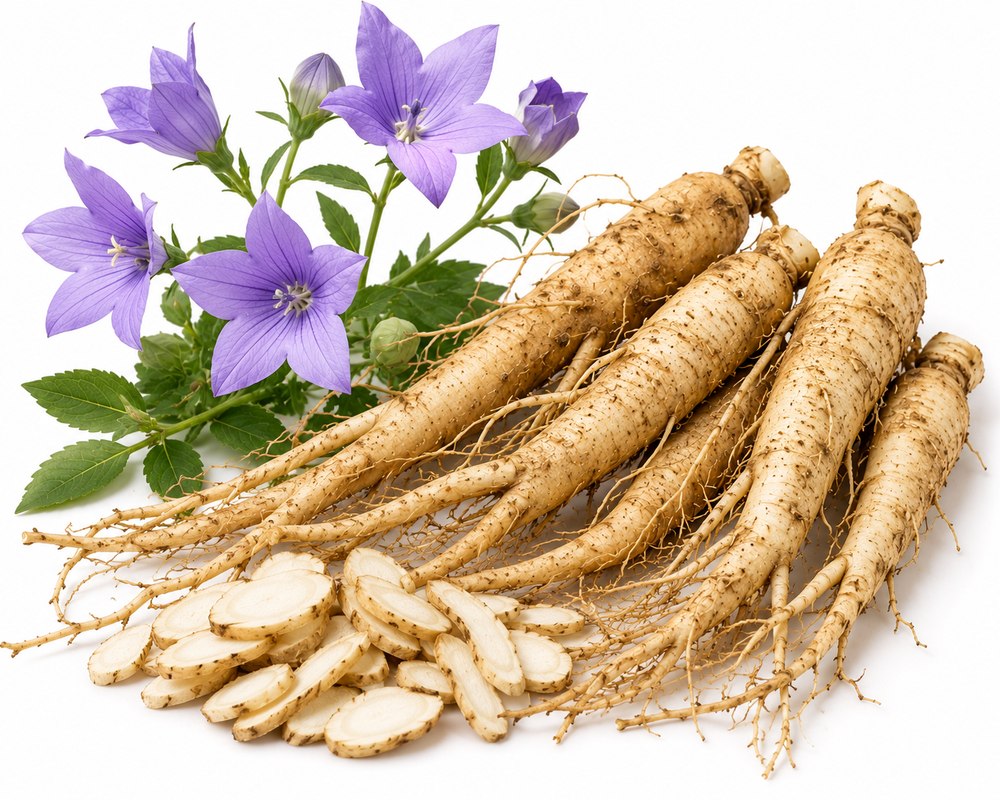
Balloon Flower Root
Overview
Balloon flower root — doraji in Korean — is as familiar on the dinner table as in the medicine cabinet, eaten as a seasoned side dish across the country. The Donguibogam describes it as a 'boat and oar' for other medicines, an herb that carries other ingredients' effects upward to the chest and throat.
In the Donguibogam
寶鑑
Traditional uses recorded in the Donguibogam
- Opens the lung, expels phlegm
- Relieves sore throat
- Carries other herbs' effects upward
- Eases labored breathing
Traditional applications recorded in the classical text
- Cough with phlegm
- Sore throat and hoarseness
- Chest tightness
- Early-stage respiratory infection
Traditional preparation
Commonly paired with licorice in Gilgyeong-tang for throat pain, and eaten as a seasoned vegetable side dish.
This describes traditional preparation recorded in the classics, not a recommendation for use today. DonguiHub does not provide dosage guidance — consult a qualified professional before using any herb.
Cautions
Frequently asked questions
What does 'boat and oar' mean for an herb?
The Donguibogam tradition describes balloon flower root as a carrier herb — one that lifts and directs the effect of other medicines in a formula upward toward the chest and throat, rather than acting powerfully on its own.
Is doraji really eaten as a food?
Yes — seasoned, blanched balloon flower root (doraji-namul) is one of Korea's most common banchan side dishes, eaten daily across the country independent of its medicinal use.
Sources
- 『동의보감』 탕액편, 허준, 1613 (원문) — 한문 원문
- 한의학고전DB (mediclassics.kr) — 원문 및 국역 자료 참조