
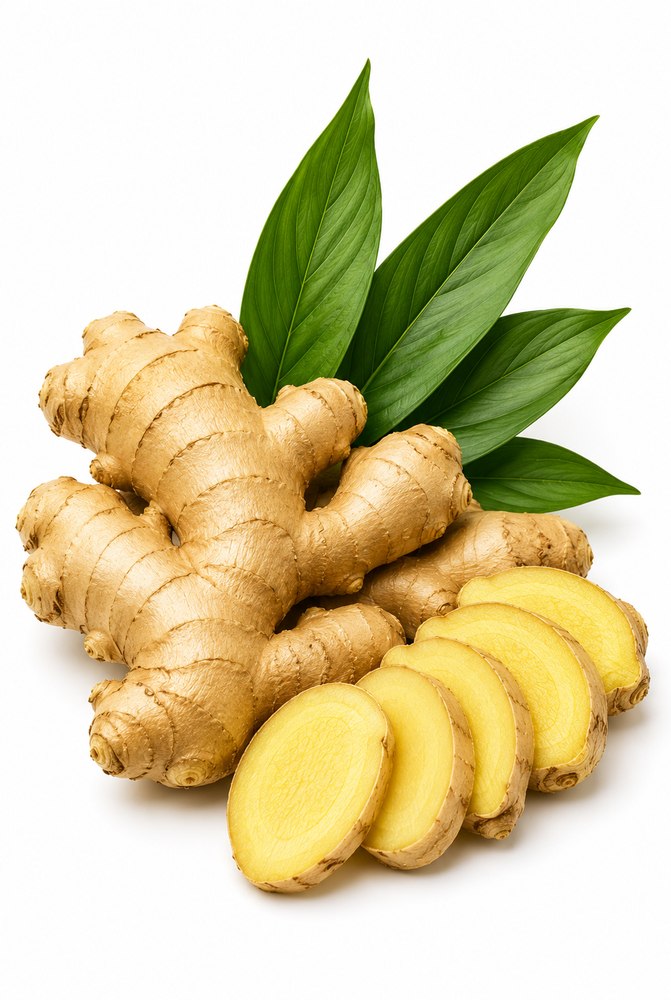
Fresh Ginger
Overview
Fresh ginger bridges the kitchen and the pharmacy in Korean tradition. It is used at the first signs of wind-cold conditions, to settle the stomach and stop nausea, and as a warming addition to countless formulas and foods. The Donguibogam even records an old saying — 'never go without ginger at meals' — meaning it may be eaten regularly, though not to excess or at night, and separately warns that eating too much ginger in the eighth and ninth lunar months was believed to harm the eyes and shorten life by the following spring. The text also draws a precise line between the fresh root and its dried form (乾薑, geon-gang): the dried root is far hotter, warms the interior more forcefully, and — once processed with fire — is said to hold its warming effect in place, making it suited to deep internal cold rather than surface chills.
In the Donguibogam
寶鑑
Traditional uses recorded in the Donguibogam
- Releases the exterior, disperses cold
- Warms the middle, stops nausea
- Warms the lung, relieves cough
- Moderates toxicity of other herbs
Traditional applications recorded in the classical text
- Early-stage common cold with chills
- Nausea and motion sickness
- Poor appetite from cold stomach
Traditional preparation
Fresh ginger is commonly added to formulas and teas. The classics note a precise preparation rule: peel the ginger when a stronger warming effect is wanted, but leave the peel on when a cooler, more balanced effect is preferred, since the flesh is warm but the skin itself is considered cool.
This describes traditional preparation recorded in the classics, not a recommendation for use today. DonguiHub does not provide dosage guidance — consult a qualified professional before using any herb.
Cautions
Frequently asked questions
What is the difference between fresh and dried ginger in Korean medicine?
Fresh ginger (saenggang) releases the exterior and stops nausea; dried ginger (geon-gang) is hotter and warms the interior more strongly. They are classified as different medicinals.
Is ginger tea a traditional remedy?
Yes. Ginger decoctions and teas have long been used at the first sign of chills in Korean households, often with jujube or honey.
Should ginger be peeled or unpeeled?
The Donguibogam gives a specific rule: the flesh is warm but the skin is cool, so ginger is peeled when a stronger warming effect is wanted and left unpeeled when a milder, more balanced effect is preferred.
Sources
- 『동의보감』 탕액편, 허준, 1613 (원문) — 한문 원문
- 한의학고전DB (mediclassics.kr) — 원문 및 국역 자료 참조