
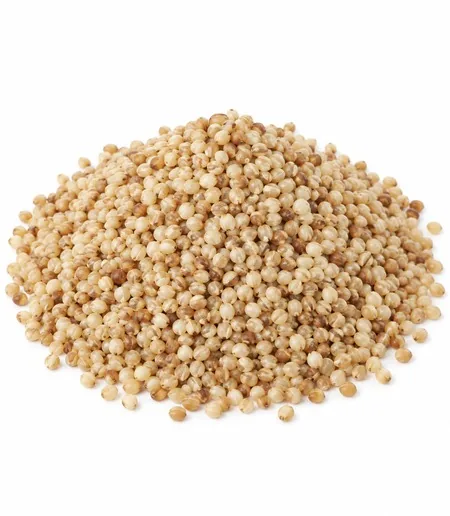
Barnyard / Broomcorn Millet (Ji)
Barnyard / Broomcorn Millet (Ji) (피, 稷米) is recorded in the Donguibogam as a qi-tonifying food herb. Its nature is cold and its taste sweet, associated with the Not specified in the source text meridians. Traditional uses recorded in the text include clears heat, boosts qi, supplements insufficiency. Caution: The text warns that eating much generates cold qi, and ranks it the lowest of the eight grains.
Overview
Pi (稷) is the grain the Donguibogam ranks, perhaps surprisingly, both as "the head of the five grains" and as the lowest of the eight grains — two judgments quoted from different sources. The text equates it with the grain called ji (穄), says it resembles millet but smaller, makes a non-sticky rice with a bland taste, and warns that eating much generates cold qi. It is a good example of how names of ancient grains do not map cleanly onto modern crops.
In the Donguibogam
寶鑑
Traditional uses recorded in the Donguibogam
- Clears heat
- Boosts qi
- Supplements insufficiency
Traditional applications recorded in the classical text
- Everyday grain cooked as non-sticky rice
Traditional preparation
DonguiHub does not provide dosage guidance.
This describes traditional preparation recorded in the classics, not a recommendation for use today. DonguiHub does not provide dosage guidance — consult a qualified professional before using any herb.
Cautions
Frequently asked questions
Why is it both "head" and "lowest" of the grains?
The entry quotes two different sources: one calls it the head of the five grains, another ranks it the lowest of the eight grains. DonguiHub reports both.
What does the text say it resembles?
It resembles millet but is smaller, makes non-sticky rice with a bland taste, and is the grain called ji (穄).
Is the modern crop the same?
Not certain — ancient grain names do not map cleanly onto modern crops, so the species note flags it.
Sources
- 『동의보감』 탕액편, 허준, 1613 (원문) — 한문 원문
- 한의학고전DB (mediclassics.kr) — 원문 및 국역 자료 참조