
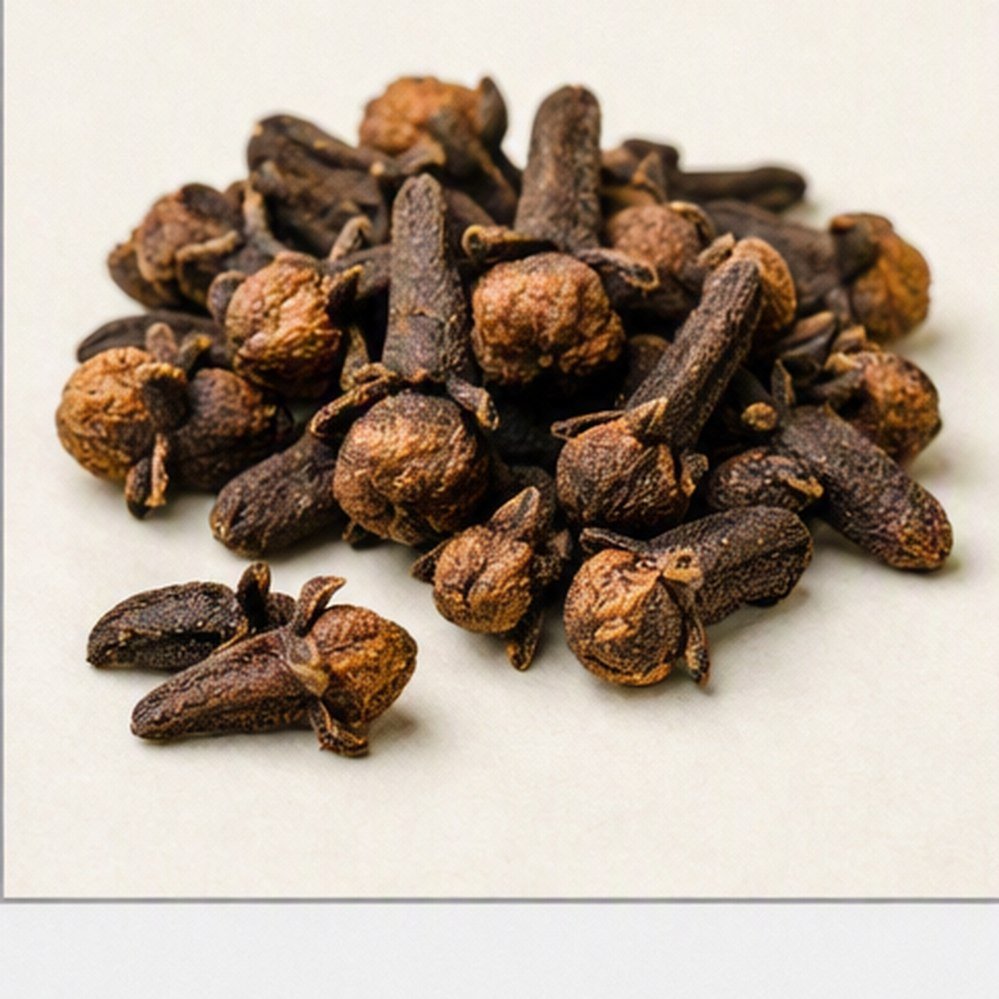
Clove
정향 (丁香) · Syzygium aromaticum (L.) Merr. & L.M.Perry
Interior-warming herb
Warm
Pungent
Lung, Stomach, Kidney
NatureWarm
TastePungent
MeridiansLung, Stomach, Kidney
Part usedFlower bud
FamilyMyrtaceae
CategoryInterior-warming herb
Overview
Clove is the same nail-shaped flower bud known worldwide as a spice, recorded in the Donguibogam as a warming remedy for a cold stomach and its own famous freshening trick: a Han-dynasty official said to have chewed cloves to cure his bad breath before appearing at court.
In the Donguibogam
東醫
寶鑑
寶鑑
性溫, 味辛, 無毒. 溫脾胃, 止霍亂, 及腎氣, 奔豚氣, 冷氣腹痛, 陰痛. 壯陽, 煖腰膝, 療反胃, 殺酒毒, 消風毒諸腫, 除齒疳䘌, 能發諸香.
Source: Donguibogam, Tangaek-pyeon (Herbology volume)
TranslationIts nature is warm, its taste pungent, and it is non-toxic. It warms the spleen and stomach, stops cholera-type vomiting and diarrhea, treats kidney qi and running-piglet qi, cold abdominal pain, and genital pain. It strengthens yang, warms the lower back and knees, treats stomach reflux, resolves alcohol toxicity, disperses wind-toxin swellings, removes dental decay and gum sores, and can bring out the fragrance of other medicines.
Traditional functions
- Warms the spleen and stomach
- Descends counterflow qi, stops vomiting and hiccup
- Warms kidney yang
- Freshens breath
Traditional applications
- Cold-type vomiting or hiccup
- Cold abdominal pain
- Stomach reflux
- Bad breath
Traditional preparation
Decoction 2–6g, or ground fine for pill and powder use.
Cautions
Caution: Warm and pungent; not suited to heat-excess conditions or dry-mouth heat signs. The classics distinguish a smaller "male" and larger "female" bud, both used medicinally. Consult a professional.
Advertisement
Frequently asked questions
Is this the same clove used as a cooking spice?
Yes — the identical nail-shaped flower bud. The Donguibogam records it as a stomach-warming medicine and even preserves the anecdote of an official chewing cloves to cure bad breath before court.
What was clove's main traditional use?
Warming a cold stomach and stopping cholera-type vomiting or hiccup, alongside warming kidney yang and freshening the breath.
Sources
- 동의보감 탕액편 (원문) — 한문 원문 발췌 — 한의학고전DB 탕액편 대조 검증 완료 (DATA-001)
- 한의학고전DB (mediclassics.kr) — 국역 참조 후 자체 재서술 (LEGAL-001)
DonguiHub is an educational and informational platform about the history and tradition of Korean medicine. It does not provide medical advice, diagnosis, or treatment. Always consult a qualified healthcare professional about health conditions and before using any herb.