
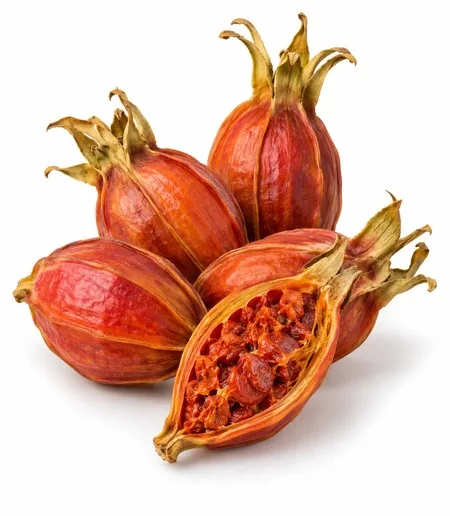
Gardenia Fruit
Gardenia Fruit (치자, 梔子) is recorded in the Donguibogam as a heat-purging, fire-draining herb. Its nature is cold and its taste bitter, associated with the Heart, Lung, Stomach meridians. Traditional uses recorded in the text include drains fire, especially of the heart and lungs, clears heat-toxin, relieves vexation and insomnia. Caution: Cold and purging in nature; not suited to those with a cold, weak spleen and stomach or loose stool.
Overview
Gardenia fruit is familiar in Korean kitchens as a natural yellow food dye (chija-mul), but the Donguibogam records it primarily as a fire-draining medicine for heat lodged in the chest and heart, prized for settling the restless, sleepless irritability that comes with internal heat.
In the Donguibogam
寶鑑
Traditional uses recorded in the Donguibogam
- Drains fire, especially of the heart and lungs
- Clears heat-toxin
- Relieves vexation and insomnia
- Promotes urination, resolves jaundice
Traditional applications recorded in the classical text
- Restlessness and insomnia from internal heat
- Red, swollen, painful eyes
- Jaundice
- Mouth sores and dry mouth from heat
Traditional preparation
The seed and the skin are traditionally used for slightly different purposes.
This describes traditional preparation recorded in the classics, not a recommendation for use today. DonguiHub does not provide dosage guidance — consult a qualified professional before using any herb.
Cautions
Frequently asked questions
Is this the same gardenia used as a yellow food dye?
Yes — the same fruit used for chija-mul (gardenia water dye) is recorded in the Donguibogam as a fire-draining medicine, primarily for heat-related restlessness and insomnia.
What is gardenia's main traditional use?
Draining heat from the heart and chest — the classics single out restless, sleepless vexation (心中煩悶) as its signature use, alongside red eyes, jaundice, and heat-toxin skin conditions.
Sources
- 『동의보감』 탕액편, 허준, 1613 (원문) — 한문 원문
- 한의학고전DB (mediclassics.kr) — 원문 및 국역 자료 참조