
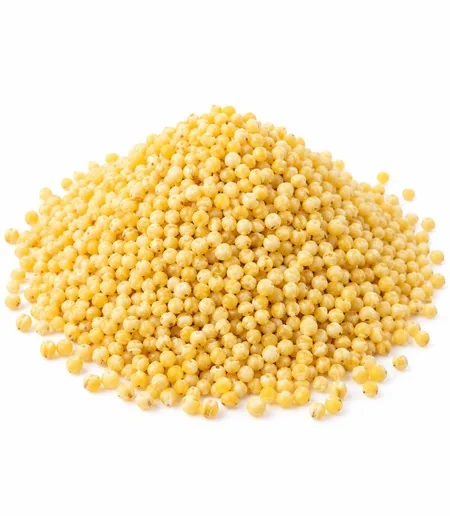
Glutinous Millet
Glutinous Millet (찰기장, 秫米) is recorded in the Donguibogam as a qi-tonifying food herb. Its nature is slightly cold (some sources: neutral) and its taste sweet, associated with the Not specified in the source text meridians. Traditional uses recorded in the text include benefits the large intestine, treats lacquer sores. Caution: The text warns that it congests the qi of the five viscera and stirs wind, so it should not be eaten constantly.
Overview
Chalgijang is the sticky millet, the one the Donguibogam says is brewed into wine and boiled into malt syrup. The text notes that Taoist adepts valued it and that wine made from it is the best of any grain; in the north it was called "yellow rice" or "yellow glutinous." Alongside this praise it gives a plain caution: it congests the five viscera, stirs wind, and should not be eaten constantly.
In the Donguibogam
寶鑑
Traditional uses recorded in the Donguibogam
- Benefits the large intestine
- Treats lacquer sores
Traditional applications recorded in the classical text
- Brewing wine and boiling malt syrup
- Occasional food
Traditional preparation
Used as a food and as the base for brewing and malt syrup. Taken in small, occasional amounts per the text's caution.
This describes traditional preparation recorded in the classics, not a recommendation for use today. DonguiHub does not provide dosage guidance — consult a qualified professional before using any herb.
Cautions
Frequently asked questions
Is it the same as glutinous rice?
No. The text compares the sticky and non-sticky millets to glutinous and non-glutinous rice, but it is a different grain; it describes it as resembling millet rice but with smaller grains.
What was it used for?
The entry says it is used to brew wine and to boil malt syrup, and notes that wine from it was considered the best.
Why is it not for constant eating?
The text says it congests the five viscera and stirs wind.
Sources
- 『동의보감』 탕액편, 허준, 1613 (원문) — 한문 원문
- 한의학고전DB (mediclassics.kr) — 원문 및 국역 자료 참조