
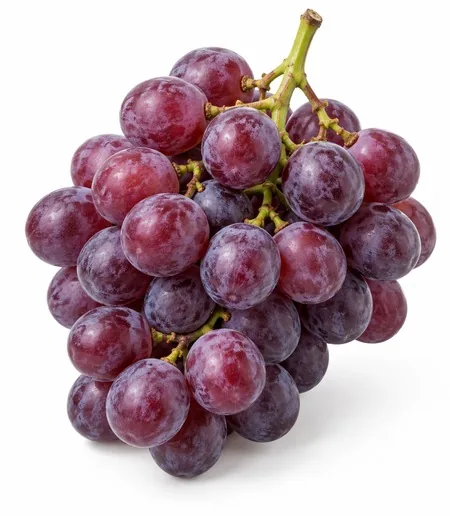
Grape
Grape (포도, 蒲萄) is recorded in the Donguibogam as a qi-tonifying, diuretic food herb. Its nature is neutral and its taste sweet (some sources: sweet-sour), associated with the Lung, Spleen, Kidney meridians. Traditional uses recorded in the text include benefits qi and resolve, relieves damp painful obstruction, benefits urination. Caution: A mild, nourishing fruit; the classics note the seedless "crystal" variety was especially prized.
Overview
Grape needs no introduction on the modern table, and the Donguibogam already records it as strengthening the body and boosting qi and resolve — noting the purple "horse-milk" grape and white "crystal" grape as the two prized varieties of its time.
In the Donguibogam
寶鑑
Traditional uses recorded in the Donguibogam
- Benefits qi and resolve
- Relieves damp painful obstruction
- Benefits urination
- Nourishes the body
Traditional applications recorded in the classical text
- General fatigue and weakness
- Damp-type joint discomfort
- Painful or difficult urination
Traditional preparation
Eaten fresh, dried (raisins), or as juice; classically also dried and applied for unresolved measles-type rash.
This describes traditional preparation recorded in the classics, not a recommendation for use today. DonguiHub does not provide dosage guidance — consult a qualified professional before using any herb.
Cautions
Frequently asked questions
Did the Donguibogam distinguish grape varieties?
Yes — it names the purple "horse-milk" grape and the white "crystal" grape (prized for being seedless) as the two most valued varieties of its time, alongside noting both round and seedless forms existed.
What was grape mainly used for?
Boosting qi and resolve, nourishing the body to make it plump and strong, and relieving damp-type joint discomfort and difficult urination.
Sources
- 『동의보감』 탕액편, 허준, 1613 (원문) — 한문 원문
- 한의학고전DB (mediclassics.kr) — 원문 및 국역 자료 참조