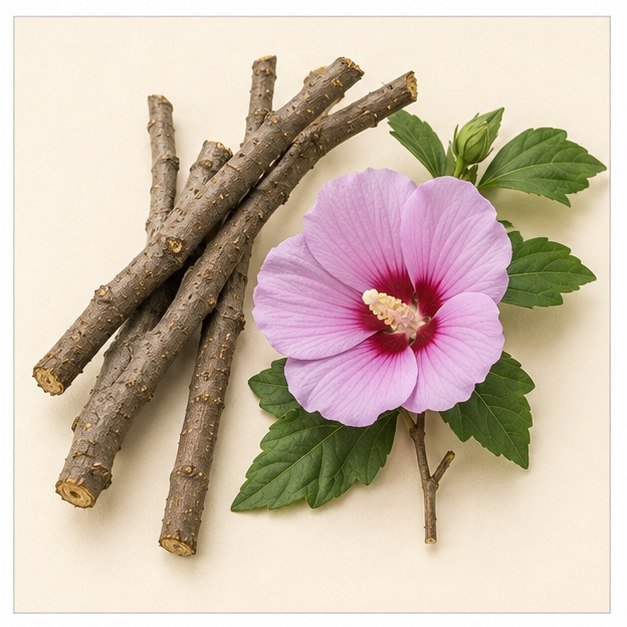
Rose of Sharon Bark
무궁화 (木槿) · Hibiscus syriacus L.
Astringent, diarrhea-stopping herb
Neutral
Not specified in the source text
Large Intestine
NatureNeutral
TasteNot specified in the source text
MeridiansLarge Intestine
Part usedBark (flower also used, recorded separately)
FamilyMalvaceae
CategoryAstringent, diarrhea-stopping herb
Overview
Mugunghwa is Korea's national flower, but the Donguibogam entry under this name treats its bark, not the bloom, as medicine — recorded for stopping intestinal bleeding and the lingering thirst that follows dysentery. The flower itself is recorded as a separate sub-entry with its own, related use.
In the Donguibogam
東醫
寶鑑
寶鑑
性平, 無毒. 止腸風瀉血, 及痢後渴.
Source: Donguibogam, Tangaek-pyeon (Herbology volume)
TranslationIts nature is neutral and it is non-toxic. It stops intestinal-wind bleeding and the thirst that follows dysentery.
Traditional functions
- Astringes the intestines
- Stops bleeding
- Relieves post-dysentery thirst
Traditional applications
- Blood in the stool from intestinal wind
- Chronic loose stool with bleeding tendency
- Thirst following a bout of dysentery
Traditional preparation
Decoction 8–16g of the bark.
Cautions
Caution: An astringent bark historically taken as a decoction; blood in the stool should always be medically evaluated rather than self-treated. Consult a professional.
Advertisement
Frequently asked questions
Does the Donguibogam use the mugunghwa flower or the bark as medicine?
The main entry (木槿) is the bark, used for intestinal bleeding and post-dysentery thirst. The flower is recorded as a separate sub-entry with its own, related use for dysentery.
Is this the same plant as Korea's national flower?
Yes — Hibiscus syriacus is the same species officially recognized as Korea's national flower; the Donguibogam entry predates that designation by centuries and treats it purely as a medicinal bark.
Sources
- 동의보감 탕액편 (원문) — 한문 원문 발췌 — 한의학고전DB 탕액편 대조 검증 완료 (DATA-001)
- 한의학고전DB (mediclassics.kr) — 국역 참조 후 자체 재서술 (LEGAL-001)
DonguiHub is an educational and informational platform about the history and tradition of Korean medicine. It does not provide medical advice, diagnosis, or treatment. Always consult a qualified healthcare professional about health conditions and before using any herb.