
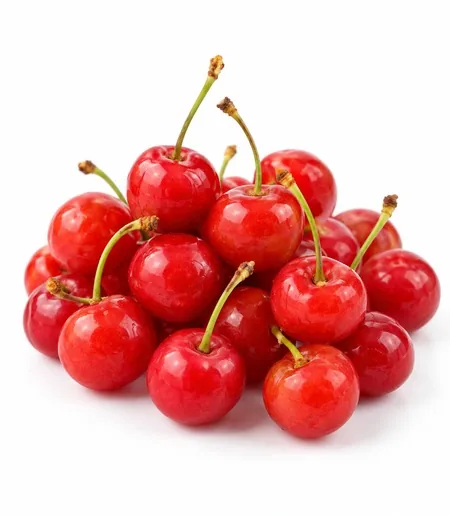
Korean Cherry
Korean Cherry (앵두, 櫻桃) is recorded in the Donguibogam as a spleen-tonifying food herb. Its nature is hot (some sources: warm) and its taste sweet, associated with the Spleen meridians. Traditional uses recorded in the text include harmonizes the middle, benefits spleen qi, improves complexion. Caution: The Donguibogam notes it can generate internal heat if eaten in large amounts, though without other harm; suited to a cold, weak spleen constitution rather than a heat-excess one.
Overview
Korean cherry ripens earliest among fruits each spring, and the Donguibogam notes this specifically — because it captures the sun's peak yang qi before other fruits, its nature runs hot. The text records it as harmonizing the middle, benefiting the spleen, and even brightening the complexion.
In the Donguibogam
寶鑑
Traditional uses recorded in the Donguibogam
- Harmonizes the middle
- Benefits spleen qi
- Improves complexion
- Stops food-related diarrhea
Traditional applications recorded in the classical text
- Weak spleen digestion
- Dull complexion
- Diarrhea from undigested food
Traditional preparation
Eaten fresh in season; classically noted to ripen before all other fruits in early-to-mid spring.
This describes traditional preparation recorded in the classics, not a recommendation for use today. DonguiHub does not provide dosage guidance — consult a qualified professional before using any herb.
Cautions
Frequently asked questions
Why does the Donguibogam say Korean cherry has a hot nature?
It explains that because Korean cherry ripens earliest among fruits — capturing the sun's peak yang qi before others — its nature runs hot, unlike most fruit, which tends toward cool or neutral.
What is Korean cherry good for according to the classics?
Harmonizing digestion and benefiting spleen qi, improving complexion and mood, and stopping diarrhea caused by undigested food.
Sources
- 『동의보감』 탕액편, 허준, 1613 (원문) — 한문 원문
- 한의학고전DB (mediclassics.kr) — 원문 및 국역 자료 참조