
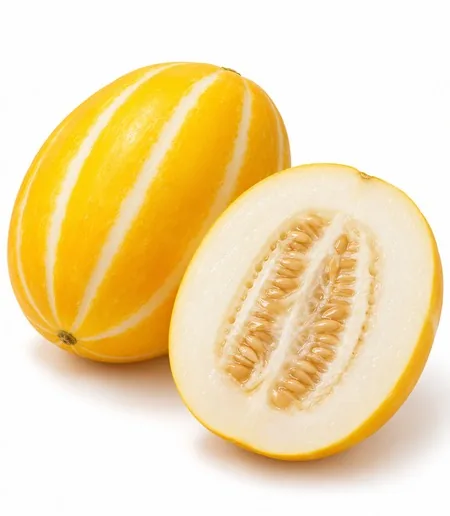
Korean Melon
Korean Melon (참외, 甛瓜) is recorded in the Donguibogam as a heat-clearing food herb (excess caution). Its nature is cold and its taste sweet, associated with the Stomach meridians. Traditional uses recorded in the text include stops thirst, clears vexing heat, benefits urination. Caution: The Donguibogam gives an unusually specific warning: melons that sink in water, or that have two stems or two navels, can be fatal and must never be eaten.
Overview
Korean melon (chamoe) is a beloved summer fruit, and the Donguibogam records its thirst-quenching, heat-clearing action — the same reason it is reached for on hot days today — while also carrying an unusually specific warning about which melons to avoid.
In the Donguibogam
寶鑑
Traditional uses recorded in the Donguibogam
- Stops thirst
- Clears vexing heat
- Benefits urination
- Unblocks stagnant qi
Traditional applications recorded in the classical text
- Summer thirst and heat discomfort
- Mouth and nose sores
- Sluggish urination in hot weather
Traditional preparation
Eaten fresh in season; always check the melon is sound (single stem, single navel, does not sink) before eating.
This describes traditional preparation recorded in the classics, not a recommendation for use today. DonguiHub does not provide dosage guidance — consult a qualified professional before using any herb.
Cautions
Frequently asked questions
What specific warning does the Donguibogam give about melons?
It warns explicitly that melons which sink in water, or which have two stems or two navels, can be fatal and must never be eaten — one of the more specific food-safety warnings in the entire text.
What is Korean melon good for according to the classics?
Quenching thirst, clearing vexing heat, benefiting urination, and treating mouth and nose sores — a classic summer heat-relief fruit.
Sources
- 『동의보감』 탕액편, 허준, 1613 (원문) — 한문 원문
- 한의학고전DB (mediclassics.kr) — 원문 및 국역 자료 참조