
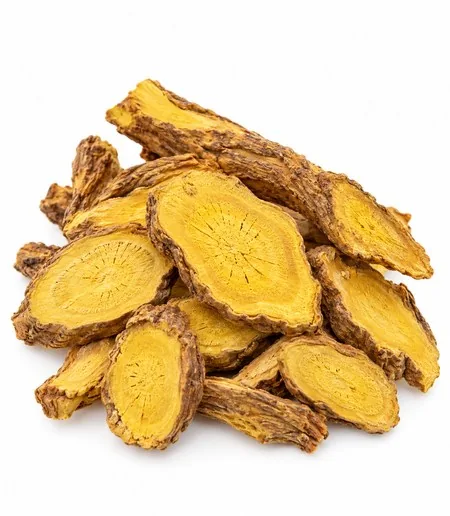
Scutellaria Root
Scutellaria Root (황금, 黃芩) is recorded in the Donguibogam as a heat-clearing, dampness-drying herb. Its nature is cold and its taste bitter, associated with the Lung, Stomach, Gallbladder, Large Intestine meridians. Traditional uses recorded in the text include clears heat, drains fire, dries dampness, resolves toxin. Caution: Cold and drying; not suited to cold-deficiency of the spleen and stomach or to those without heat signs.
Overview
Scutellaria root is one of the most enduring heat-clearing herbs in East Asian medicine, its old alternate name "rotten intestine" (腐腸) referring simply to the hollow, decayed-looking core of the aged root — not its action. The Donguibogam already distinguishes two grades by shape, a distinction still used by herb graders today.
In the Donguibogam
寶鑑
Traditional uses recorded in the Donguibogam
- Clears heat, drains fire
- Dries dampness
- Resolves toxin
- Cools blood
Traditional applications recorded in the classical text
- Fever with alternating chills
- Jaundice
- Damp-heat diarrhea or dysentery
- Breast abscess and boils
Traditional preparation
Wine-fried for upper-body use, plain-fried for lower-body use per traditional practice.
This describes traditional preparation recorded in the classics, not a recommendation for use today. DonguiHub does not provide dosage guidance — consult a qualified professional before using any herb.
Cautions
Frequently asked questions
Why was scutellaria root once called "rotten intestine"?
The Donguibogam explains this old alternate name (腐腸) comes from the hollow, decayed-looking core of the aged root — a description of its appearance, not a warning about its action.
What is scutellaria root's main traditional use?
Clearing heat, especially fever with alternating chills and heat-toxin conditions — the Donguibogam also records it for jaundice, damp-heat diarrhea, and breast abscess.
Sources
- 『동의보감』 탕액편, 허준, 1613 (원문) — 한문 원문
- 한의학고전DB (mediclassics.kr) — 원문 및 국역 자료 참조