
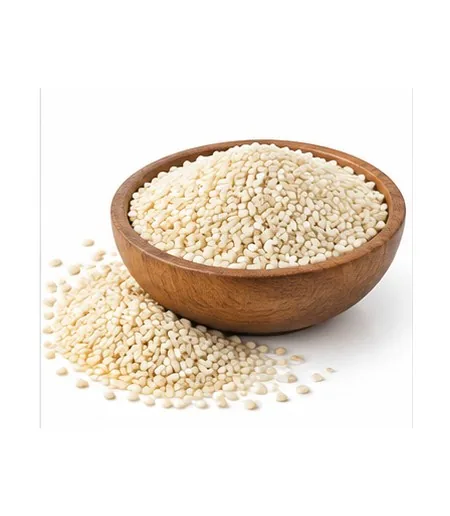
White Sesame
White Sesame (흰깨, 白油麻) is recorded in the Donguibogam as a moistening food herb. Its nature is greatly cold and its taste not specified in the source text, associated with the Not specified in the source text meridians. Traditional uses recorded in the text include smooths the stomach and intestines, frees the blood vessels, moistens the skin. Caution: The oil sub-entry warns that people with tooth problems and spleen-stomach illness must not eat it.
Overview
White sesame is a kitchen staple, and the Donguibogam says plainly how it differs from black sesame: the text states there are two kinds of sesame, "the white moistens the lung, the black moistens the kidney," and that white sesame is the same sort of thing as black (huma), told apart only by color. It also records a detail still true in Korean kitchens: raw sesame is cold and roasted sesame is hot. The entry's sub-entry on sesame oil distinguishes raw-pressed oil for medicine from roasted oil for food.
In the Donguibogam
寶鑑
Traditional uses recorded in the Donguibogam
- Smooths the stomach and intestines
- Frees the blood vessels
- Moistens the skin
Traditional applications recorded in the classical text
- Cooking seed (raw is cold, roasted is hot)
- Oil: raw-pressed for medicine, roasted for food
Traditional preparation
Eaten as seed and pressed into oil. The text says oil pressed from raw seed goes into medicine and roasted seed makes the cooking oil.
This describes traditional preparation recorded in the classics, not a recommendation for use today. DonguiHub does not provide dosage guidance — consult a qualified professional before using any herb.
Cautions
Frequently asked questions
What is the difference from black sesame?
The text says the white moistens the lung and the black moistens the kidney, and that white sesame is the same kind as black sesame, distinguished by color.
Is raw or roasted sesame warmer?
The entry says raw sesame is cold and roasted is hot.
Who should avoid the oil?
The text says people with tooth problems and spleen-stomach illness must not eat it.
Sources
- 『동의보감』 탕액편, 허준, 1613 (원문) — 한문 원문
- 한의학고전DB (mediclassics.kr) — 원문 및 국역 자료 참조