
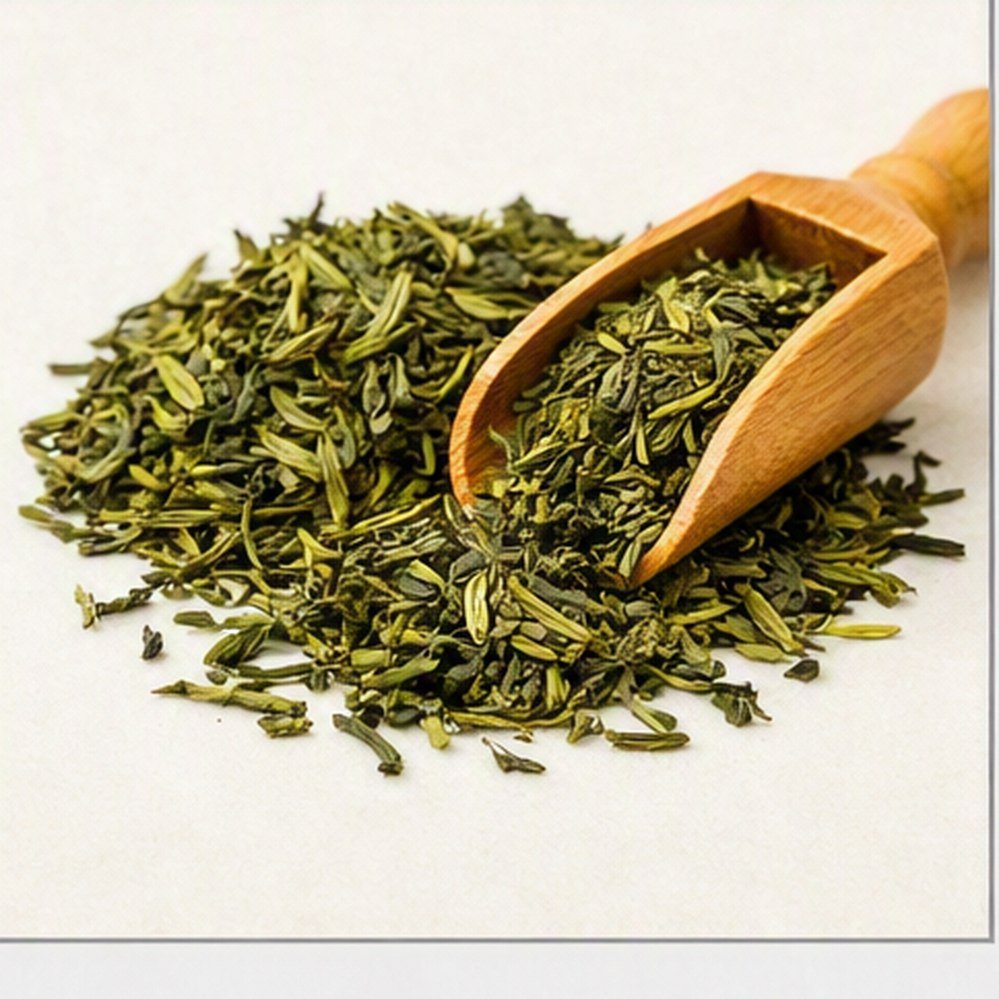
Sparrow-Tongue Tea Leaf
작설차 (苦茶) · Camellia sinensis (L.) Kuntze
Digestive, food-stagnation-resolving herb
Slightly cold (some sources: cold)
Sweet, bitter
Pericardium, Liver
NatureSlightly cold (some sources: cold)
TasteSweet, bitter
MeridiansPericardium, Liver
Part usedYoung leaf bud
FamilyTheaceae
CategoryDigestive, food-stagnation-resolving herb
Find by concern: Food stagnationDaytime drowsiness
Overview
Jakseolcha ("sparrow-tongue tea") takes its name from its tiny, tongue-shaped young leaves, picked early for the finest grade. The Donguibogam lists it under the plain name "bitter tea" (苦茶) and records the same everyday effects tea drinkers still recognize: clearing the head, aiding digestion after a heavy meal, and keeping drowsiness at bay.
In the Donguibogam
東醫
寶鑑
寶鑑
性微寒一云冷, 味甘苦, 無毒. 下氣, 消宿食, 淸頭目, 利小便, 止消渴, 令人少睡. 又解炙炒毒.
Source: Donguibogam, Tangaek-pyeon (Herbology volume)
TranslationIts nature is slightly cold (some say cold), its taste sweet and bitter, and it is non-toxic. It lowers qi, resolves lingering food stagnation, clears the head and eyes, promotes urination, stops wasting-thirst, and reduces excessive sleepiness. It also counters the toxicity of grilled and fried foods.
Traditional functions
- Aids digestion, resolves food stagnation
- Clears the head and eyes
- Promotes urination
- Reduces drowsiness
Traditional applications
- Fullness after overeating
- Mental fog, heavy-headedness
- Excessive daytime sleepiness needing alertness
Traditional preparation
Brewed as tea from the young leaf, 2–4g per serving.
Cautions
Caution: The classics themselves caution that long-term use can be depleting and that tea taken cold tends to accumulate phlegm; best enjoyed warm and in moderation, and avoided close to bedtime given its wakefulness effect. Consult a professional.
Advertisement
Frequently asked questions
Is jakseolcha the same plant as ordinary green tea?
Yes — both come from Camellia sinensis. "Jakseolcha" refers to tea made from the earliest, tiny tongue-shaped leaf buds, prized as the finest grade.
Did the Donguibogam warn about drinking too much tea?
Yes — the text itself notes that long-term use can be depleting to the body and that cold tea tends to cause phlegm to accumulate, advising moderation.
Sources
- 동의보감 탕액편 (원문) — 한문 원문 발췌 — 한의학고전DB 탕액편 대조 검증 완료 (DATA-001)
- 한의학고전DB (mediclassics.kr) — 국역 참조 후 자체 재서술 (LEGAL-001)
DonguiHub is an educational and informational platform about the history and tradition of Korean medicine. It does not provide medical advice, diagnosis, or treatment. Always consult a qualified healthcare professional about health conditions and before using any herb.