
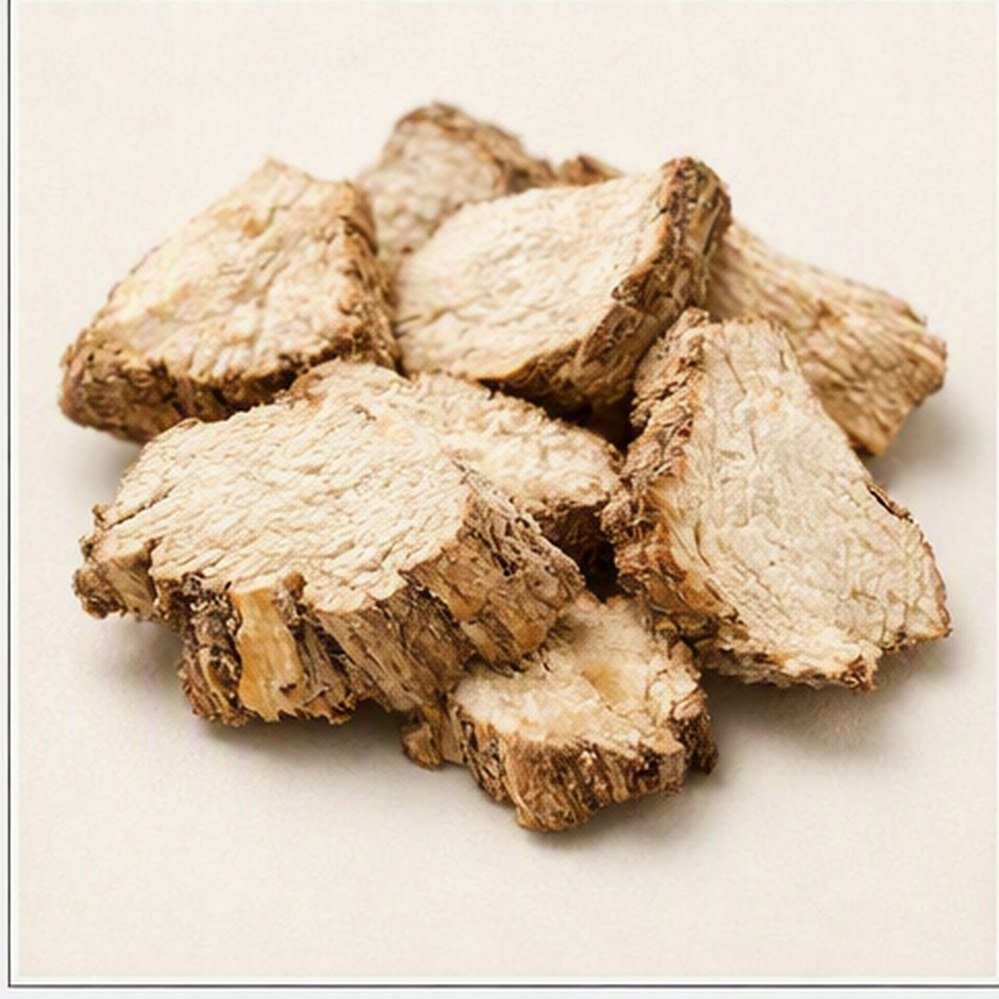
Angelica Dahurica Root
Angelica Dahurica Root (백지, 白芷) is recorded in the Donguibogam as a wind-cold releasing herb. Its nature is warm and its taste pungent, associated with the Lung, Stomach, Large Intestine meridians. Traditional uses recorded in the text include dispels wind, relieves headache, opens nasal passages, resolves toxin, expels pus. Caution: Warming and dispersing; not suited to heat-type headache or yin-deficiency with heat signs.
Overview
Angelica dahurica root is a classic remedy for wind-type headache with watery, teary eyes, and the Donguibogam also records its long history as a facial cosmetic — made into a face ointment to brighten the complexion and fade dark spots, a use that predates its modern presence in skincare formulations.
In the Donguibogam
寶鑑
Traditional uses recorded in the Donguibogam
- Dispels wind, relieves headache
- Opens nasal passages
- Resolves toxin, expels pus
- Brightens the complexion
Traditional applications recorded in the classical text
- Wind-type headache with watery eyes
- Nasal congestion and sinus discomfort
- Boils and carbuncles with discharge
- Dark spots or blemishes on the skin
Traditional preparation
DonguiHub does not provide dosage guidance.
This describes traditional preparation recorded in the classics, not a recommendation for use today. DonguiHub does not provide dosage guidance — consult a qualified professional before using any herb.
Cautions
Frequently asked questions
Did people really use this as a facial cosmetic?
Yes — the Donguibogam explicitly records it made into a face ointment to brighten the complexion and remove dark spots and scars, centuries before its appearance in modern skincare ingredient lists.
What is angelica dahurica's main traditional use?
Wind-type headache with tearing, watery eyes — the text also records it for nasal and sinus discomfort, and for expelling pus from boils and carbuncles.
Sources
- 『동의보감』 탕액편, 허준, 1613 (원문) — 한문 원문
- 한의학고전DB (mediclassics.kr) — 원문 및 국역 자료 참조