
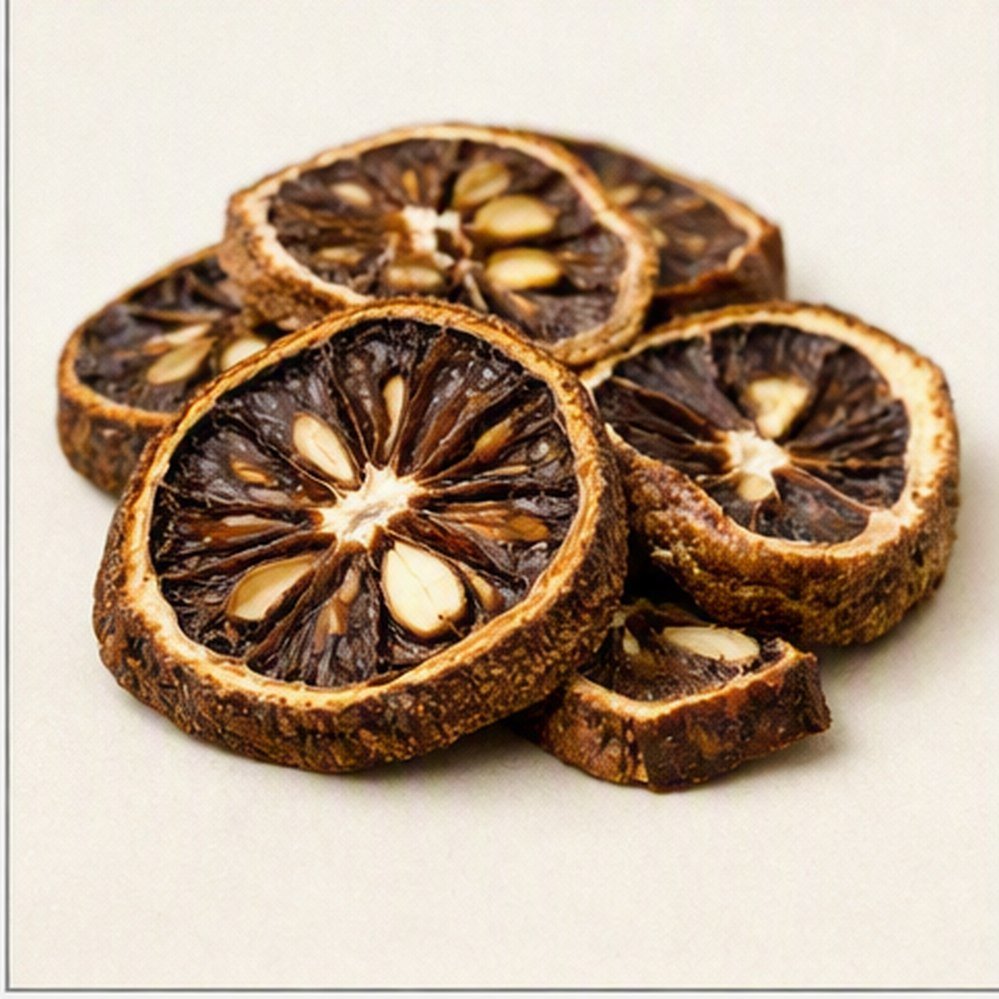
Bitter Orange (mature fruit)
Overview
Bitter orange is harvested young as jishi (枳實) and mature as jigak (枳殼) — the Donguibogam explains the classical distinction plainly: the mature fruit (殼) acts higher, on the chest and skin, while the young fruit (實) acts lower, on the heart and stomach. Both share the same plant but different traditional targets.
In the Donguibogam
寶鑑
Traditional functions
- Moves qi in the chest
- Resolves phlegm stagnation
- Relieves distension and fullness
- Unblocks the bowels
Traditional applications
- Chest oppression with cough
- Abdominal or intestinal fullness
- Wind-itch and numbness
- Hemorrhoid-related bowel discomfort
Traditional preparation
Decoction 4–12g, traditionally soaked to remove the pith and bran-fried before use.
Cautions
Frequently asked questions
What's the difference between jigak (枳殼) and jisil (枳實)?
They come from the same tree at different ripeness: jisil is the young, unripe fruit, jigak the mature one. The Donguibogam records that the mature fruit acts higher, on the chest and skin, while the young fruit acts lower, on the heart and stomach.
What was bitter orange's main traditional use?
Relieving chest oppression and phlegm — the Donguibogam highlights lung-qi cough and phlegm stagnation in the chest as its primary use, alongside easing abdominal fullness.
Sources
- 동의보감 탕액편 (원문) — 한문 원문 발췌 — 한의학고전DB 탕액편 대조 검증 완료 (DATA-001)
- 한의학고전DB (mediclassics.kr) — 국역 참조 후 자체 재서술 (LEGAL-001)