
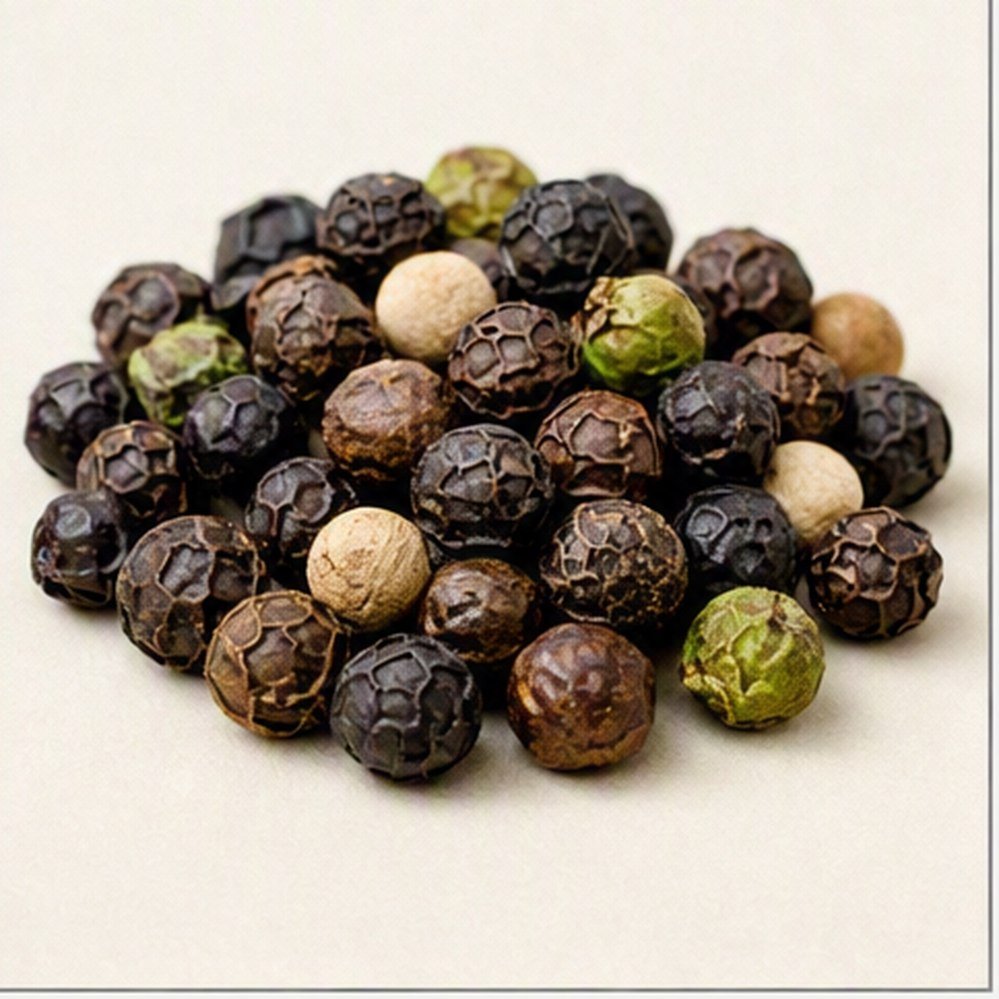
Black Pepper
호초 (胡椒) · Piper nigrum L.
Interior-warming herb
Greatly warm
Pungent
Stomach, Large Intestine
NatureGreatly warm
TastePungent
MeridiansStomach, Large Intestine
Part usedFruit (peppercorn)
FamilyPiperaceae
CategoryInterior-warming herb
Overview
Black pepper needs no introduction as a kitchen spice, and the Donguibogam records exactly the role that made it valuable long before refrigeration: warming a cold stomach, and counteracting the toxicity of spoiled fish, meat, and mushrooms. The text also distinguishes its unripe form, picked green, as a separate remedy (蓽澄茄).
In the Donguibogam
東醫
寶鑑
寶鑑
性大溫, 味辛, 無毒. 下氣溫中去痰, 除藏府中風冷, 止霍亂心腹冷痛, 及主冷痢. 殺一切魚ㆍ肉ㆍ鱉ㆍ菌蕈毒.
Source: Donguibogam, Tangaek-pyeon (Herbology volume)
TranslationIts nature is greatly warm, its taste pungent, and it is non-toxic. It brings down qi, warms the center, and resolves phlegm; it removes wind-cold from the viscera, stops cholera-type cold pain of the chest and abdomen, and treats cold-type dysentery. It counters the toxicity of all manner of fish, meat, turtle, and mushroom.
Traditional functions
- Warms the stomach, dispels cold
- Descends qi, resolves phlegm
- Relieves cold-type abdominal pain
- Counters food toxicity
Traditional applications
- Cold-type stomach or abdominal pain
- Cholera-type vomiting and diarrhea
- Cold-type dysentery
- Suspected food poisoning from fish, meat, or mushrooms
Traditional preparation
Decoction or powder 1–4g of the crushed peppercorn.
Cautions
Caution: Very hot and pungent; not suited to heat-excess conditions, dry mouth, or red tongue signs. Culinary amounts are generally fine, but medicinal doses should follow guidance. Consult a professional.
Advertisement
Frequently asked questions
Is this the same black pepper used in cooking?
Yes — the identical peppercorn. The Donguibogam records the very reason it became a valued spice historically: warming a cold stomach and countering the toxicity of spoiled fish, meat, and mushrooms.
What is bichengga (蓽澄茄) — is it a different herb?
No — the Donguibogam records it as the same plant's unripe, green-picked fruit, listed as a related sub-entry with a similar but slightly distinct traditional use.
Sources
- 동의보감 탕액편 (원문) — 한문 원문 발췌 — 한의학고전DB 탕액편 대조 검증 완료 (DATA-001)
- 한의학고전DB (mediclassics.kr) — 국역 참조 후 자체 재서술 (LEGAL-001)
DonguiHub is an educational and informational platform about the history and tradition of Korean medicine. It does not provide medical advice, diagnosis, or treatment. Always consult a qualified healthcare professional about health conditions and before using any herb.