Chinese Quince
모과 (木瓜) · Chaenomeles sinensis (Thouin) Koehne
Wind-damp dispelling herb
Warm
Sour
Liver, Spleen
NatureWarm
TasteSour
MeridiansLiver, Spleen
Part usedFruit
FamilyRosaceae
CategoryWind-damp dispelling herb
Overview
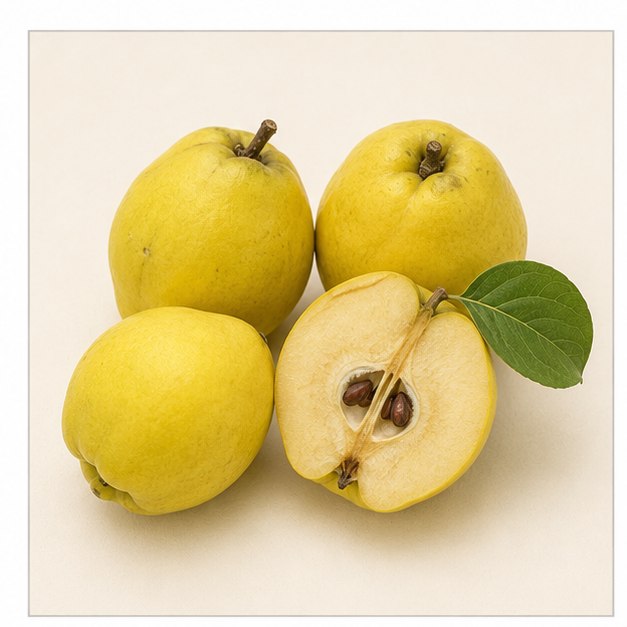
The fragrant quince — famous for perfuming a room and for its role in traditional tea — is recorded in the Donguibogam as the herb for cramping and for legs weakened by damp. Its sour, warming nature is credited with relaxing sinews, calming the cholera-like cramps of summer, and strengthening the knees.
In the Donguibogam
東醫
寶鑑
寶鑑
性溫, 味酸, 無毒. 主霍亂大吐下, 轉筋不止. 消食, 止痢後渴.
Source: Donguibogam, Tangaek-pyeon (Herbology volume)
TranslationIts nature is warm, its taste sour, and it is non-toxic. It chiefly treats cholera-like violent vomiting and diarrhea with unrelenting cramps, dissolves food, and stops thirst after dysentery.
Traditional functions
- Relaxes sinews, stops cramping
- Transforms dampness, harmonizes the stomach
- Strengthens the knees and legs
- Eases summer cholera-like turmoil
Traditional applications
- Muscle cramps, especially of the calves
- Weak, heavy legs from damp
- Vomiting and diarrhea with cramping
- Indigestion
Traditional preparation
Decoction 6–12g; commonly steeped as a fragrant tea (mogwa-cha).
Cautions
Caution: Sour and astringent; traditionally used cautiously when there is much internal heat or difficult urination. Not a fruit eaten raw in quantity. Consult a professional.
Advertisement
Frequently asked questions
Is mogwa tea the same quince used as medicine?
Yes — the fragrant fruit brewed as mogwa-cha is the same Chinese quince the Donguibogam records for cramping and leg weakness. The tea is a mild everyday form of a recognized medicinal.
Why is quince linked to muscle cramps?
Its sour, warming nature was traditionally credited with "relaxing the sinews," making it the classic herb for calf cramps and the cramping of summer digestive upsets.
Sources
- 동의보감 탕액편 (원문) — 한문 원문 발췌 — 한의학고전DB 탕액편 대조 검증 완료 (DATA-001)
- 한의학고전DB (mediclassics.kr) — 국역 참조 후 자체 재서술 (LEGAL-001)
DonguiHub is an educational and informational platform about the history and tradition of Korean medicine. It does not provide medical advice, diagnosis, or treatment. Always consult a qualified healthcare professional about health conditions and before using any herb.