
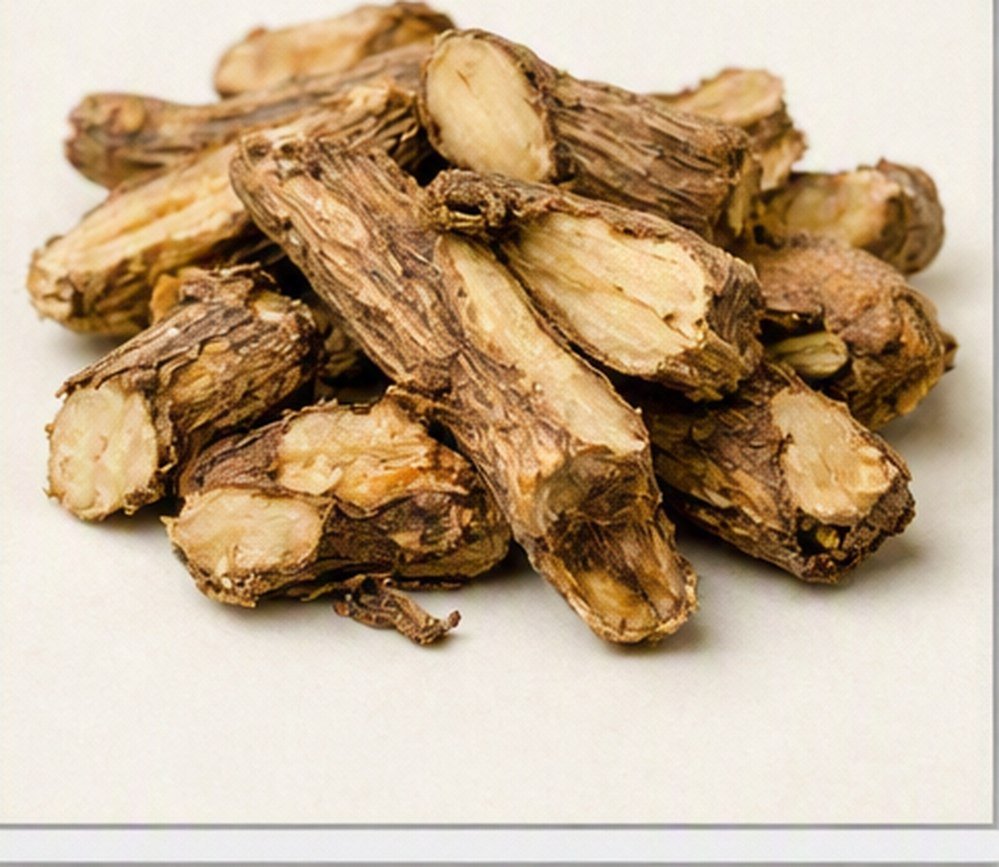
Clematis Root
Overview
Clematis root earned its reputation as "the essential medicine for pain" through a curious folk method of quality-checking: gatherers sought roots from plants that grew where they could not hear running water, believing — as the Donguibogam records — that the sound made the plant's energy restless and prone to "wandering," weakening its potency.
In the Donguibogam
寶鑑
Traditional uses recorded in the Donguibogam
- Dispels wind-damp
- Relieves joint pain
- Resolves phlegm-fluid accumulation
- Unblocks the viscera
Traditional applications recorded in the classical text
- Cold-damp joint pain of the lower back and knees
- Phlegm-fluid accumulation in the chest
- Abdominal masses
- Old, stubborn wind-damp conditions
Traditional preparation
Traditionally wine-washed and roasted.
This describes traditional preparation recorded in the classics, not a recommendation for use today. DonguiHub does not provide dosage guidance — consult a qualified professional before using any herb.
Cautions
Frequently asked questions
Why did gatherers avoid roots near running water?
The Donguibogam records the folk belief that hearing flowing water made the plant's energy restless and prone to "wandering," weakening its potency — so roots from quiet spots were considered superior.
What is clematis root's main traditional use?
It was called "the essential medicine for pain," especially cold-damp joint pain of the lower back and knees, alongside dispersing phlegm-fluid accumulation in the chest.
Sources
- 『동의보감』 탕액편, 허준, 1613 (원문) — 한문 원문
- 한의학고전DB (mediclassics.kr) — 원문 및 국역 자료 참조