Eucommia Bark
두충 (杜仲) · Eucommia ulmoides Oliv.
Kidney-yang tonifying herb
Neutral-warm
Pungent, sweet
Liver, Kidney
NatureNeutral-warm
TastePungent, sweet
MeridiansLiver, Kidney
Part usedBark
FamilyEucommiaceae
CategoryKidney-yang tonifying herb
Overview
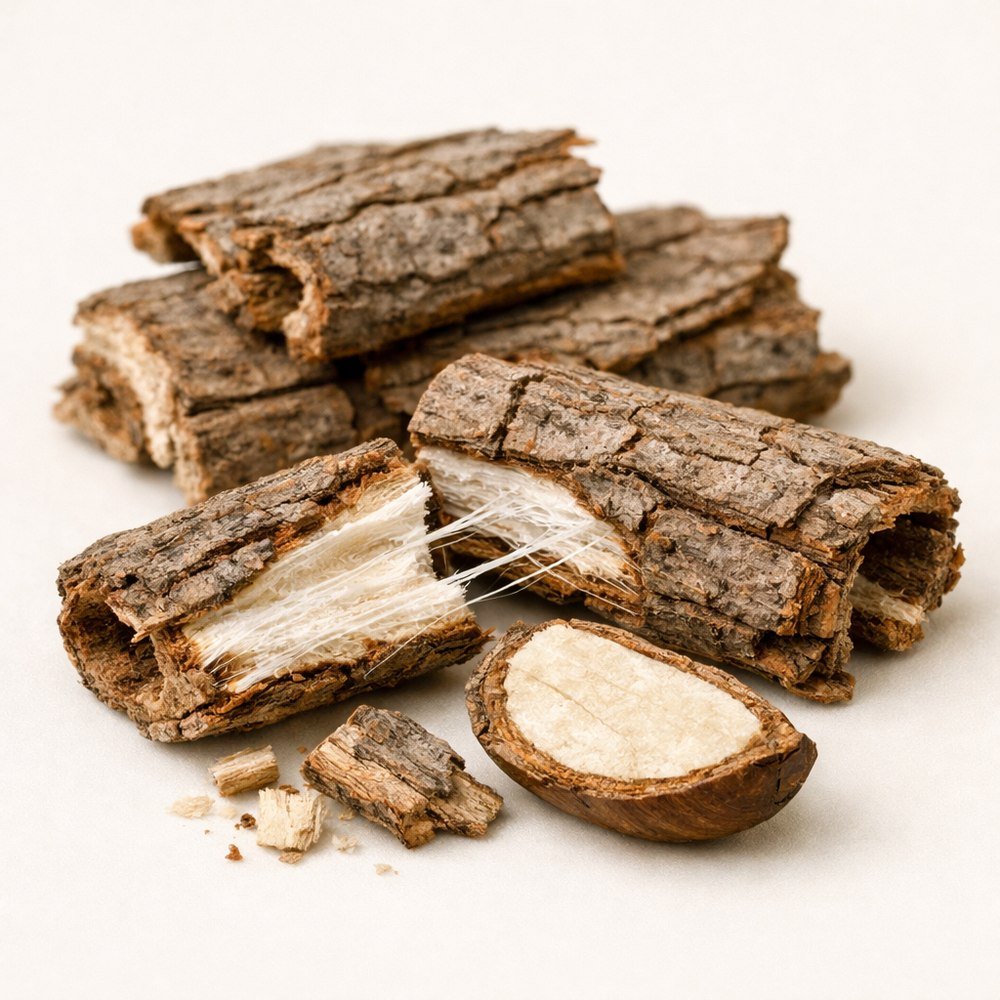
Eucommia bark is still sold in Korea today as duchung-cha, a tea for the lower back and knees. The Donguibogam already records exactly this use — treating kidney taxation, spasmodic pain of the lower back and spine, and aching legs — and notes the classic test of quality: snap the bark and look for fine white silk threads connecting the two halves.
In the Donguibogam
東醫
寶鑑
寶鑑
性平溫, 味辛甘, 無毒. 治腎勞, 腰脊攣痛, 脚中痠疼. 堅筋骨, 除陰下濕痒, 小便餘瀝, 益精氣, 能治腎冷, 䐴腰痛.
Source: Donguibogam, Tangaek-pyeon (Herbology volume)
TranslationIts nature is neutral-warm, its taste pungent and sweet, and it is non-toxic. It treats kidney taxation, spasmodic pain of the lower back and spine, and aching legs. It strengthens the sinews and bones, removes damp itching below, treats dribbling residual urination, boosts essence-qi, and can treat kidney cold and lumbago from strain.
Traditional functions
- Tonifies liver and kidney
- Strengthens sinews and bones
- Secures essence, reduces dribbling urination
- Relieves lower-back and knee weakness
Traditional applications
- Chronic low back pain, especially from strain or weakness
- Weak, aching knees and legs
- Dribbling or residual urination
- General kidney-deficiency fatigue
Traditional preparation
Decoction 8–16g, traditionally honey- or ginger-fried.
Cautions
Caution: A warming tonic; not suited to heat-excess conditions. Traditionally roasted with honey or ginger juice until the silk threads inside break. Consult a professional.
Advertisement
Frequently asked questions
Is this the same eucommia used in duchung-cha (eucommia tea)?
Yes — the same bark, and the Donguibogam already records its exact modern use: treating low back and spine pain and aching legs.
How did the classics judge good-quality eucommia bark?
By snapping it and checking for fine white silk-like threads connecting the two halves — a traditional quality test still referenced in herb markets today.
Sources
- 동의보감 탕액편 (원문) — 한문 원문 발췌 — 한의학고전DB 탕액편 대조 검증 완료 (DATA-001)
- 한의학고전DB (mediclassics.kr) — 국역 참조 후 자체 재서술 (LEGAL-001)
DonguiHub is an educational and informational platform about the history and tradition of Korean medicine. It does not provide medical advice, diagnosis, or treatment. Always consult a qualified healthcare professional about health conditions and before using any herb.