
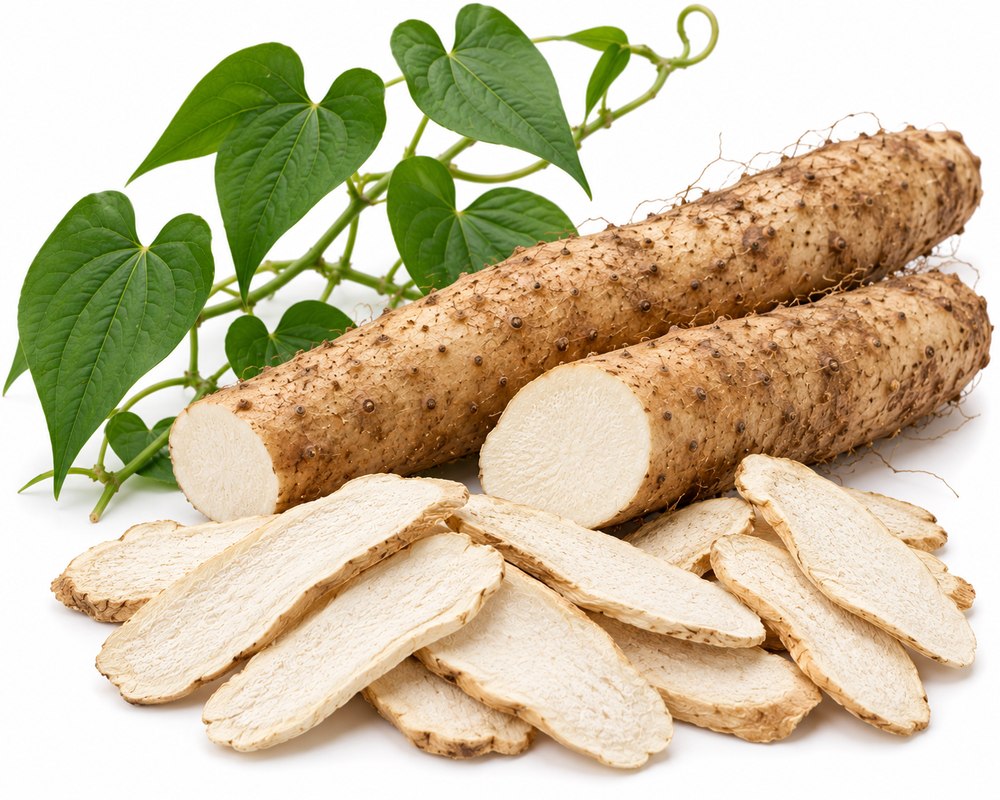
Korean Yam
Overview
Korean yam bridges food and medicine as directly as any herb in this tradition, gently tonifying the spleen, lung, and kidney all at once. The Donguibogam even records the origin of its now-common name: an ancient naming taboo during the Song dynasty forced a change from an older name to 'mountain medicine,' the name still used today.
In the Donguibogam
寶鑑
Traditional uses recorded in the Donguibogam
- Tonifies the spleen and stomach
- Nourishes the lung
- Secures kidney essence
- Builds strength gently
Traditional applications recorded in the classical text
- General weakness and fatigue
- Poor appetite with loose stools
- Persistent cough from lung deficiency
- Recovery after illness
Traditional preparation
Or eaten as food; a core ingredient of Yukmi-jihwang-hwan alongside rehmannia and cornus fruit.
This describes traditional preparation recorded in the classics, not a recommendation for use today. DonguiHub does not provide dosage guidance — consult a qualified professional before using any herb.
Cautions
Frequently asked questions
Why is it called 'mountain medicine' rather than its older name?
The Donguibogam explains that an older name shared a character with the personal names of two Song-dynasty emperors; naming taboos of the era required it be changed, and 'mountain medicine' (山藥) has been used ever since.
Is Korean yam the same as the yam eaten as food?
Yes — it is one of the few traditional herbs that is equally at home as a food and a medicine, eaten roasted, steamed, or ground into porridge as well as used in decoctions.
Sources
- 『동의보감』 탕액편, 허준, 1613 (원문) — 한문 원문
- 한의학고전DB (mediclassics.kr) — 원문 및 국역 자료 참조