
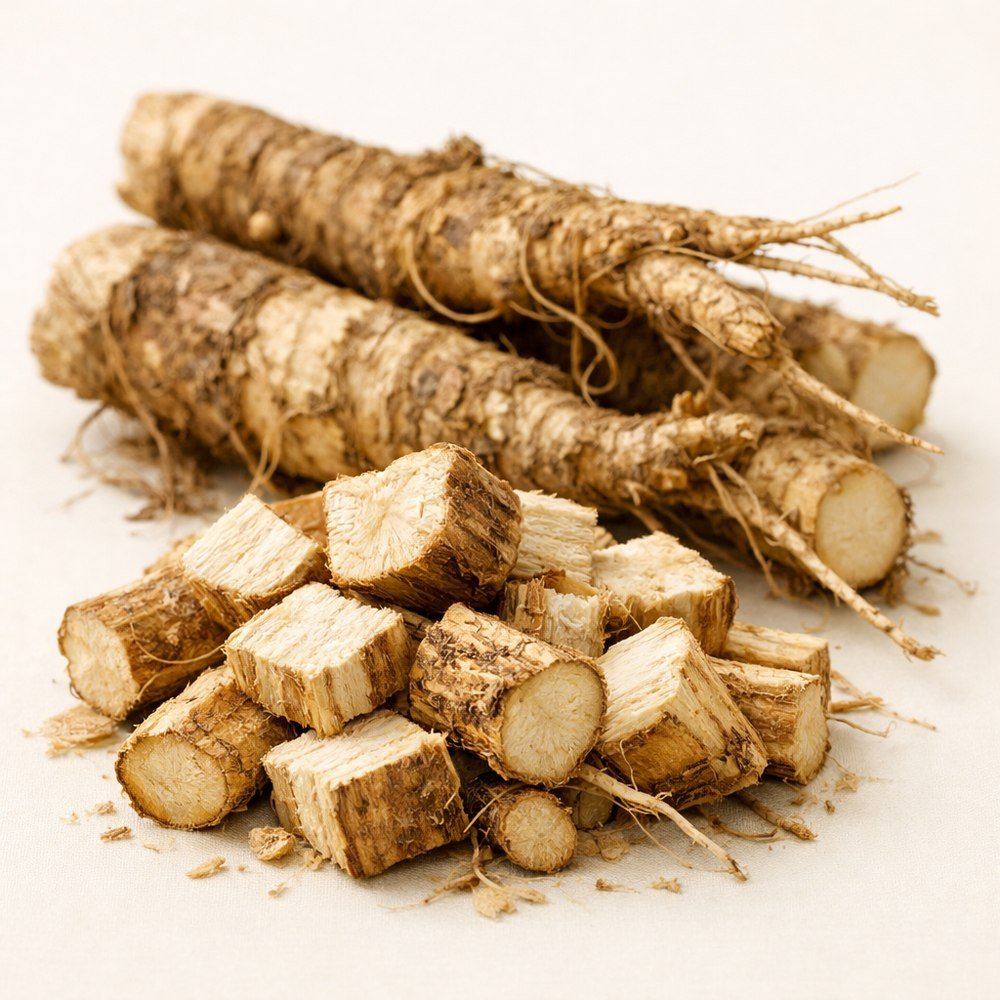
Kudzu Root
Kudzu Root (갈근, 葛根) is recorded in the Donguibogam as a exterior-releasing herb. Its nature is neutral (some sources: slightly cold) and its taste sweet, associated with the Spleen, Stomach meridians. Traditional uses recorded in the text include releases the exterior, induces sweating, resolves alcohol toxicity, generates fluids, relieves thirst. Caution: Promotes sweating and disperses; not suited to those who already sweat excessively or have weak, cold digestion without heat signs.
Overview
Kudzu root is the source of the familiar hangover tea (galgeun-cha) still sold across Korea today. The Donguibogam records it as releasing the exterior, promoting sweating, resolving alcohol toxicity, and relieving thirst — the very same properties behind its modern reputation as a hangover remedy.
In the Donguibogam
寶鑑
Traditional uses recorded in the Donguibogam
- Releases the exterior, induces sweating
- Resolves alcohol toxicity
- Generates fluids, relieves thirst
- Raises clear yang, relieves stiffness
Traditional applications recorded in the classical text
- Wind-cold headache with neck or shoulder stiffness
- Hangover, thirst after drinking
- Fever with thirst and dry mouth
- Early-stage cold with no sweating
Traditional preparation
DonguiHub does not provide dosage guidance.
This describes traditional preparation recorded in the classics, not a recommendation for use today. DonguiHub does not provide dosage guidance — consult a qualified professional before using any herb.
Cautions
Frequently asked questions
Is kudzu root the same as the hangover tea sold in Korea?
Yes — galgeun-cha (kudzu root tea) is made from this exact root, and the Donguibogam already records its use for resolving alcohol toxicity and relieving thirst.
What else was kudzu root used for besides hangovers?
The Donguibogam lists wind-cold headache, inducing sweating in early-stage colds, and relieving thirst and heat in the chest, alongside its alcohol-resolving action.
Sources
- 『동의보감』 탕액편, 허준, 1613 (원문) — 한문 원문
- 한의학고전DB (mediclassics.kr) — 원문 및 국역 자료 참조