
Liriope Tuber
Overview
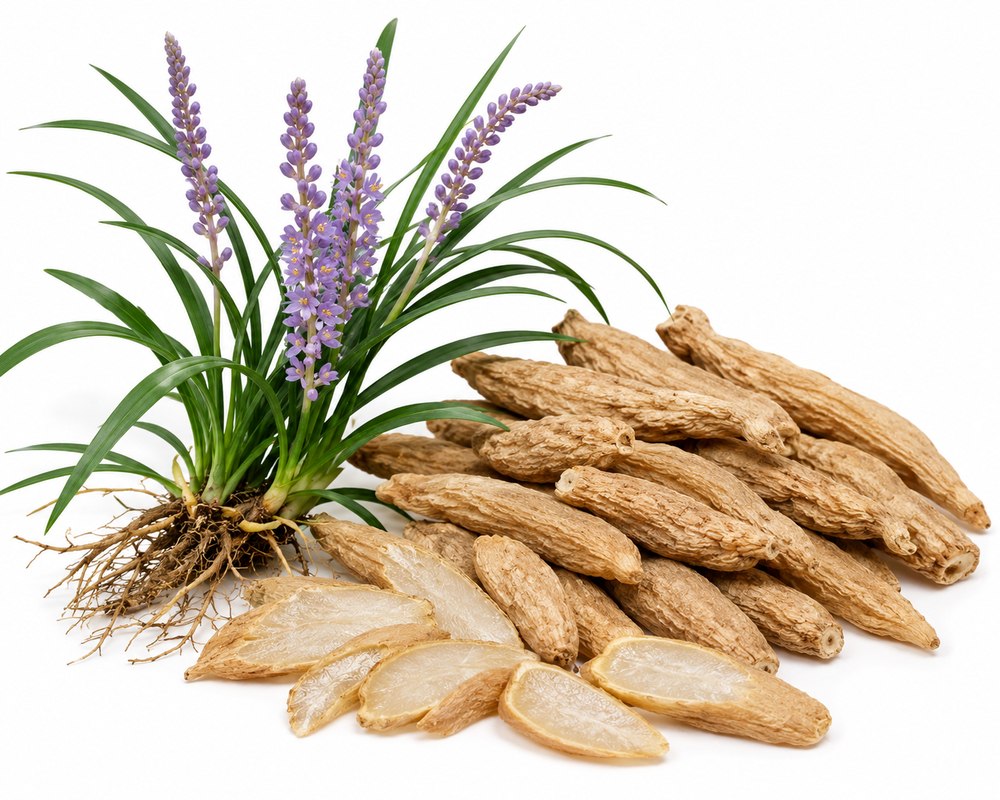
Liriope tuber takes its name from the shape of its root, which forms small beads resembling wheat grains — hence 'wheat-tuber winter herb' in the original Korean-Chinese name. The Donguibogam prizes it for moistening dryness and heat left behind by illness, especially when thirst and a dry mouth persist.
In the Donguibogam
寶鑑
Traditional uses recorded in the Donguibogam
- Nourishes lung and stomach yin
- Generates fluids, relieves thirst
- Clears heat, calms the heart
- Moistens dryness after illness
Traditional applications recorded in the classical text
- Persistent thirst and dry mouth
- Dry cough with little phlegm
- Restlessness after illness
- Fatigue with lingering low-grade heat
Traditional preparation
A core ingredient of Saengmaek-san (Generate-the-Pulse Powder) alongside ginseng and schisandra.
This describes traditional preparation recorded in the classics, not a recommendation for use today. DonguiHub does not provide dosage guidance — consult a qualified professional before using any herb.
Cautions
Frequently asked questions
Where does the name 'wheat-tuber winter herb' come from?
The Donguibogam notes that its root forms a string of small beads shaped like wheat kernels, remaining green through winter — the source of both its Korean and Chinese names.
Why is it paired with ginseng and schisandra?
This combination, Saengmaek-san, is a classic summer formula for replenishing qi and fluids lost to heat and sweating — each herb tonifies a different aspect: qi, fluids, and astringing.
Sources
- 『동의보감』 탕액편, 허준, 1613 (원문) — 한문 원문
- 한의학고전DB (mediclassics.kr) — 원문 및 국역 자료 참조