
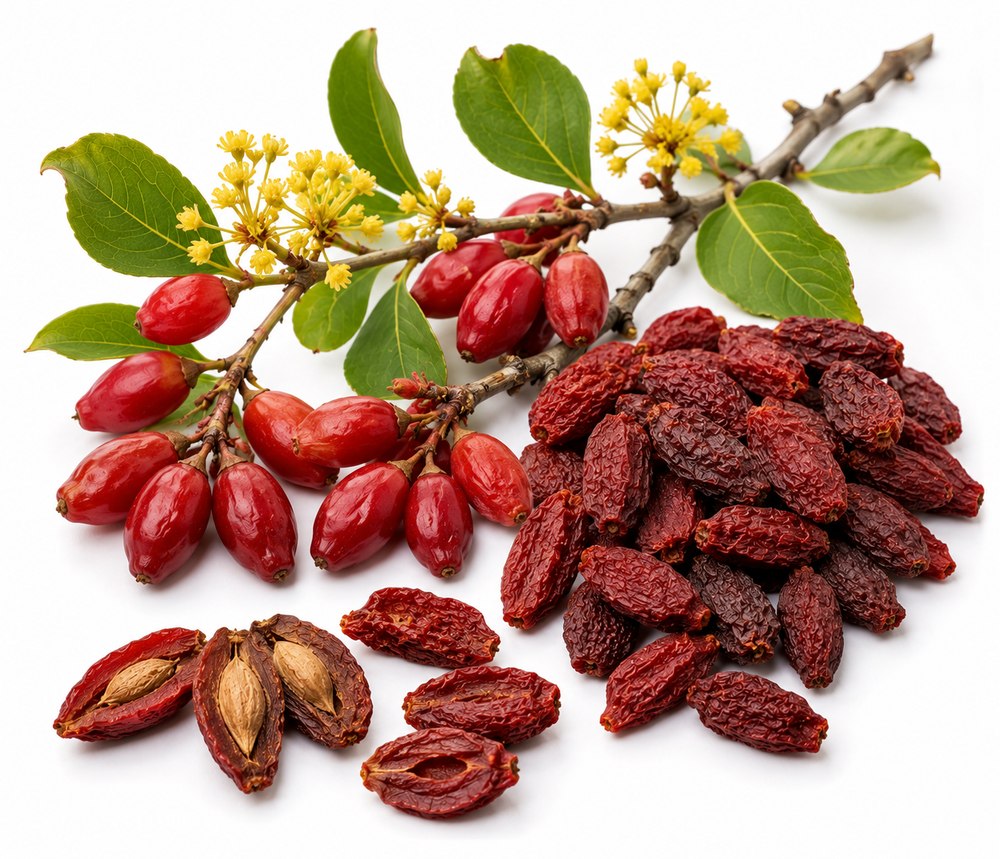
Cornus Fruit
Overview
Cornus fruit is a foundational kidney-nourishing herb in Korean tradition, valued for strengthening what the classics call the lower back and knees. The Donguibogam notes its flesh tonifies while its seed has the opposite, dispersing effect — so the pit is always removed before use.
In the Donguibogam
寶鑑
Traditional uses recorded in the Donguibogam
- Tonifies the liver and kidney
- Astringes essence, reduces excess discharge
- Strengthens the lower back and knees
- Reduces frequent urination
Traditional applications recorded in the classical text
- Frequent urination, especially in older adults
- Lower back and knee weakness
- Dizziness from kidney-essence deficiency
- General fatigue with aging
Traditional preparation
Pit removed; a core ingredient of Yukmi-jihwang-hwan (Six-Flavor Rehmannia Pill).
This describes traditional preparation recorded in the classics, not a recommendation for use today. DonguiHub does not provide dosage guidance — consult a qualified professional before using any herb.
Cautions
Frequently asked questions
Why must the pit be removed?
The Donguibogam distinguishes the two parts sharply: the flesh tonifies and secures essence, while the seed has a dispersing, leaking effect — the opposite of what the herb is used for — so classical processing always discards the pit.
Why is it paired with rehmannia in Yukmi-jihwang-hwan?
This six-herb formula is the classic prescription for kidney-yin deficiency; cornus fruit's astringent, essence-securing action complements rehmannia's richer nourishing role.
Sources
- 『동의보감』 탕액편, 허준, 1613 (원문) — 한문 원문
- 한의학고전DB (mediclassics.kr) — 원문 및 국역 자료 참조