
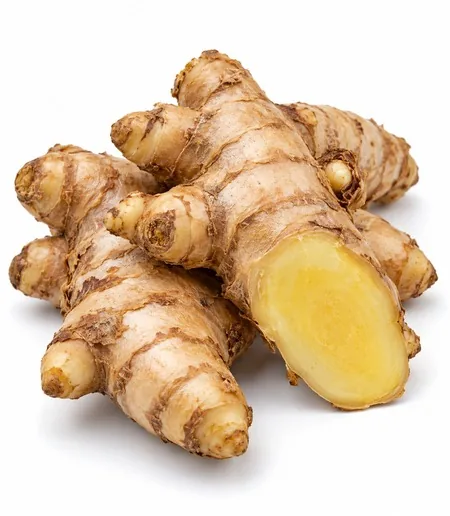
Curcuma Tuber
Curcuma Tuber (울금, 鬱金) is recorded in the Donguibogam as a blood-moving, qi-regulating herb. Its nature is cold and its taste pungent, bitter, associated with the Heart, Liver, Gallbladder meridians. Traditional uses recorded in the text include moves blood, breaks up stagnation, regulates qi, relieves depression-stagnation, cools the blood. Caution: Cold and blood-moving; not suited to pregnancy or bleeding tendencies without professional guidance.
Overview
A close relative of turmeric, this tuber is noted in the Donguibogam not for a strong fragrance but for a light, rising qi said to carry the scent of wine upward and outward — the classical basis for its use in opening depression and stagnation that will not disperse on its own.
In the Donguibogam
寶鑑
Traditional uses recorded in the Donguibogam
- Moves blood, breaks up stagnation
- Regulates qi, relieves depression-stagnation
- Cools the blood
- Stops bleeding-related pain
Traditional applications recorded in the classical text
- Chest or heart pain from qi-blood stagnation
- Blood in the urine
- Stagnation-type depression that will not disperse
- Wounds
Traditional preparation
DonguiHub does not provide dosage guidance.
This describes traditional preparation recorded in the classics, not a recommendation for use today. DonguiHub does not provide dosage guidance — consult a qualified professional before using any herb.
Cautions
Frequently asked questions
Is this the same plant as turmeric?
It is a close relative in the same genus (Curcuma). The Donguibogam records this tuber distinctly, noting its light, rising qi rather than a strong fragrance as its defining trait.
What is turmeric tuber's main traditional use?
Moving blood and opening stagnation — the Donguibogam highlights chest pain from blood-qi stagnation and blood in the urine as its core uses.
Sources
- 『동의보감』 탕액편, 허준, 1613 (원문) — 한문 원문
- 한의학고전DB (mediclassics.kr) — 원문 및 국역 자료 참조