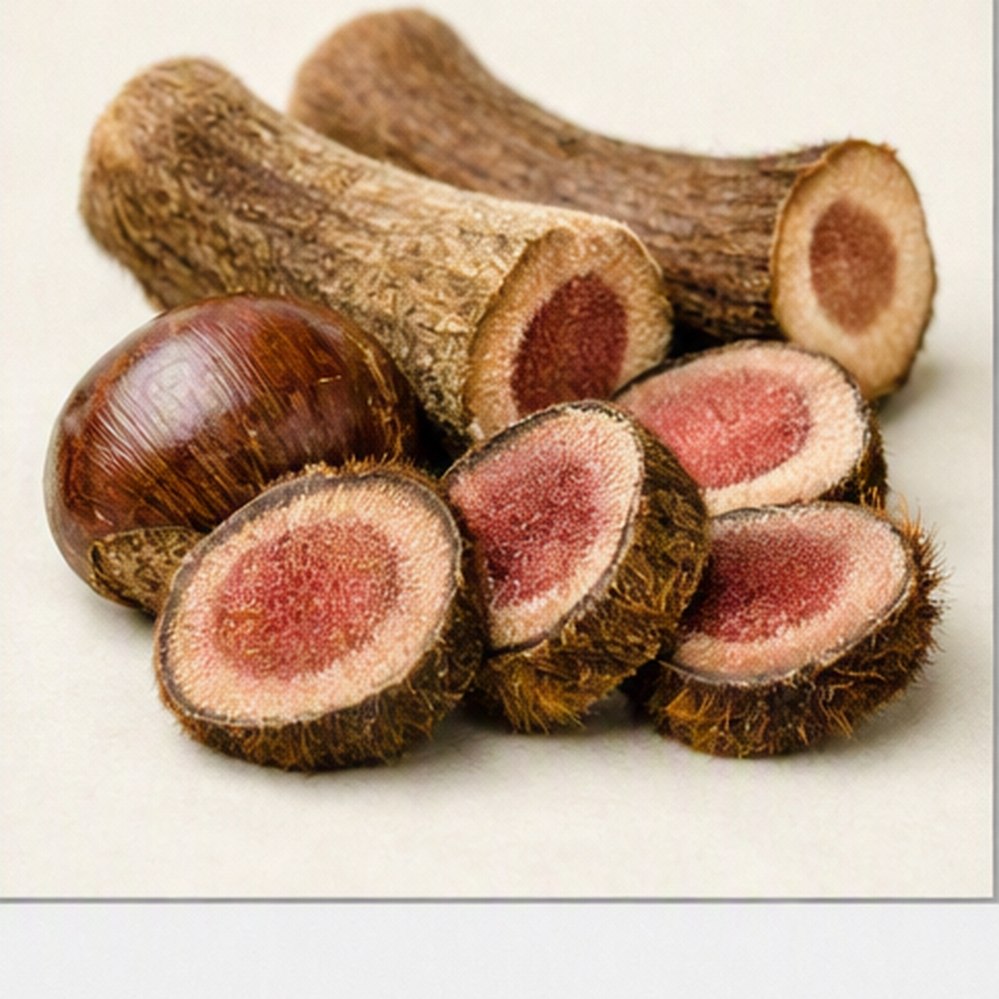
Deer Antler (Velvet)
Overview
Deer antler is the single most prized tonic in East Asian medicine, harvested each spring while the new antler is still soft, blood-rich, and unossified — the Donguibogam grades quality by shape, preferring branched, "saddle-shaped" antlers over the softest, most tender ones for their fuller strength. The text also carries a striking, specific warning: never sniff it directly, as tiny creatures inside the velvet can enter the nose and cause harm.
In the Donguibogam
寶鑑
Traditional uses recorded in the Donguibogam
- Tonifies kidney yang
- Strengthens sinews and bones
- Relieves general debility and wasting
- Secures essence, stops abnormal bleeding
Traditional applications recorded in the classical text
- General debility with aching limbs
- Weak, cold lower back and knees
- Abnormal uterine bleeding or discharge
- Kidney-deficiency fatigue
Traditional preparation
Ground fine for pill and powder use,; often prepared in decoctions with other tonic herbs under professional guidance.
This describes traditional preparation recorded in the classics, not a recommendation for use today. DonguiHub does not provide dosage guidance — consult a qualified professional before using any herb.
Cautions
Frequently asked questions
Why does the Donguibogam warn against smelling deer antler directly?
It records a specific, unusual warning: tiny creatures can live inside the velvet antler and enter the nose if sniffed directly, causing harm — a practical safety note rather than a general property.
Is deer antler from an endangered species?
No — velvet antler used in traditional medicine comes from regularly farmed deer species, harvested each spring while the antler is still soft, a well-established agricultural practice distinct from concerns around endangered wild species.
Sources
- 『동의보감』 탕액편, 허준, 1613 (원문) — 한문 원문
- 한의학고전DB (mediclassics.kr) — 원문 및 국역 자료 참조