
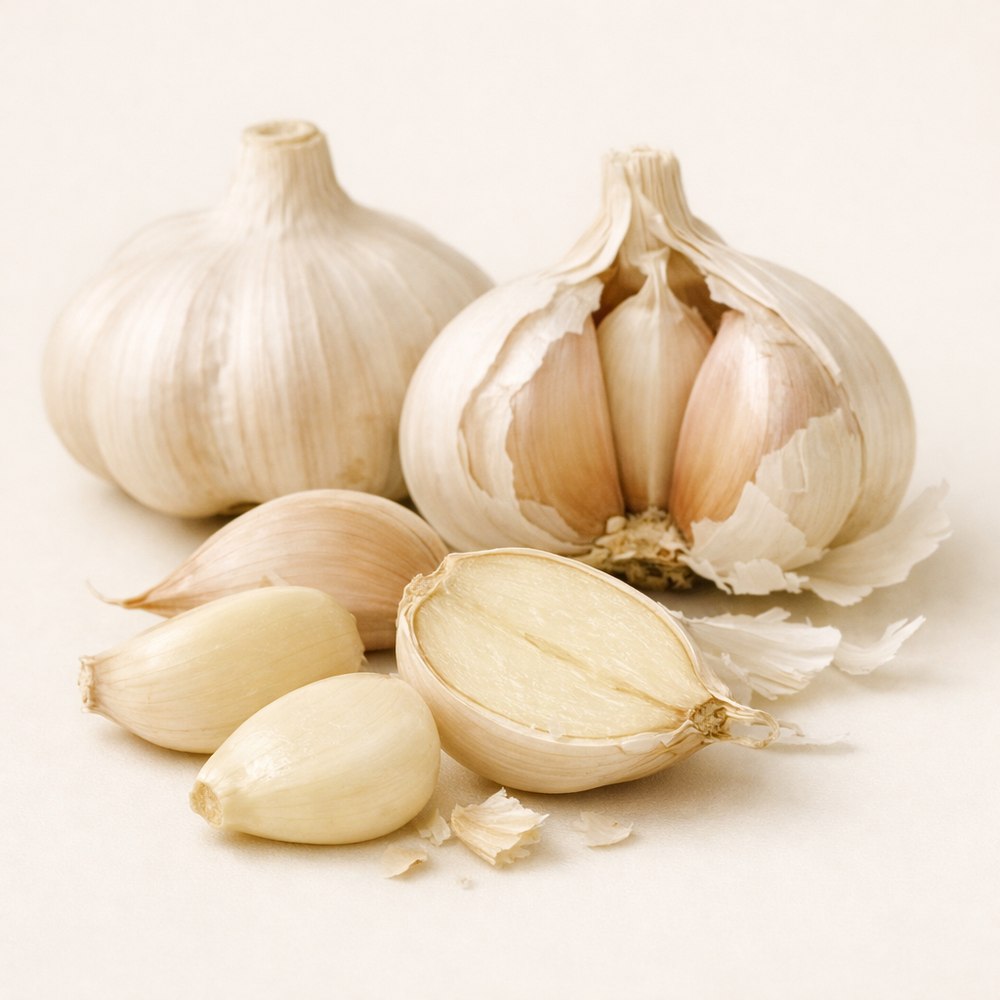
Garlic
Overview
Garlic sits at the very center of the Korean table and, in the Donguibogam, at the crossroads of food and medicine. Recorded as pungent and warming, it was valued for warming the digestive center, dispelling damp and cold, and — in a line that reads strikingly modern — warding off epidemic and pestilential qi.
In the Donguibogam
寶鑑
Traditional uses recorded in the Donguibogam
- Warms the middle, fortifies the spleen
- Dispels damp and cold
- Disperses swellings and sores
- Traditionally noted to ward off epidemic qi
Traditional applications recorded in the classical text
- Poor appetite from a cold stomach
- Damp-cold digestive upset
- Cold-pattern diarrhea
- Traditional preventive use in epidemic seasons
Traditional preparation
Used as food and medicine; classically roasted or aged to temper its toxicity and harshness.
This describes traditional preparation recorded in the classics, not a recommendation for use today. DonguiHub does not provide dosage guidance — consult a qualified professional before using any herb.
Cautions
Frequently asked questions
Did the Donguibogam really record garlic against epidemics?
Yes — it lists warding off "epidemic pestilence" (溫疫) among garlic’s actions, reflecting a long folk tradition of using pungent, aromatic foods during outbreaks. This is a historical record, not a modern medical claim.
Is raw or cooked garlic better in tradition?
Classical sources note garlic’s toxicity and harshness, and it was often roasted or processed to temper it. Raw garlic is more irritating to the stomach and eyes in the traditional view.
Sources
- 『동의보감』 탕액편, 허준, 1613 (원문) — 한문 원문
- 한의학고전DB (mediclassics.kr) — 원문 및 국역 자료 참조