
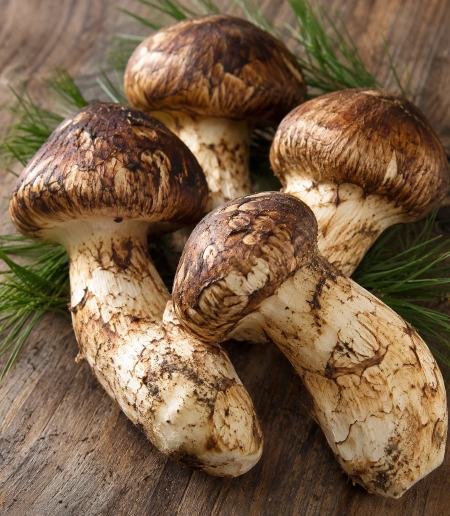
Pine Mushroom (Songi)
Songi (松耳) is a mushroom recorded in the Donguibogam's vegetable volume as neutral in nature, sweet in taste and non-toxic. The text praises its flavor and fragrance, notes its scent of pine, and ranks it first among the wood mushrooms (木茸), but it records no effect and no use. Caution: wild mushrooms can be confused with poisonous ones, so do not eat them without expert identification.
Overview
Songi is the prized mushroom of old pine forests. The Donguibogam records it in the vegetable volume as non-toxic, neutral and sweet, praises its flavor and fragrance, and ranks it first among the "wood mushrooms" (木茸). The entry is short: it records nature, taste, scent and where it grows, but no medical effect and no way of using it. The text gives no scientific name; today the name is understood as the matsutake mushroom, which is the identification used here by convention.
In the Donguibogam
寶鑑
Traditional uses recorded in the Donguibogam
- Flavor and fragrance prized in the text (味甚香美)
- Carries a scent of pine (有松氣)
- Ranked first among wood mushrooms (木茸中第一)
- No medical effect is recorded in the original
Traditional applications recorded in the classical text
- Recorded as a food mushroom valued for flavor and fragrance
- The original gives no preparation or use
Traditional preparation
The original does not record how to prepare or use it; it only describes the mushroom's flavor, scent and habitat. DonguiHub does not give doses or recipes.
This describes traditional preparation recorded in the classics, not a recommendation for use today. DonguiHub does not provide dosage guidance — consult a qualified professional before using any herb.
Cautions
Frequently asked questions
How does the Donguibogam rank songi?
It calls songi the first among the "wood mushrooms" (木茸), praising its very fragrant, fine flavor and its scent of pine.
Where does the text say songi grows?
In the mountains beneath old pine trees, borrowing the pine's qi to grow.
Does the original record a medicinal effect of songi?
No. It records nature, taste, scent and habitat only, and says nothing about effects or use.
Sources
- 『동의보감』 탕액편, 허준, 1613 (원문) — 한문 원문
- 한의학고전DB (mediclassics.kr) — 원문 및 국역 자료 참조