
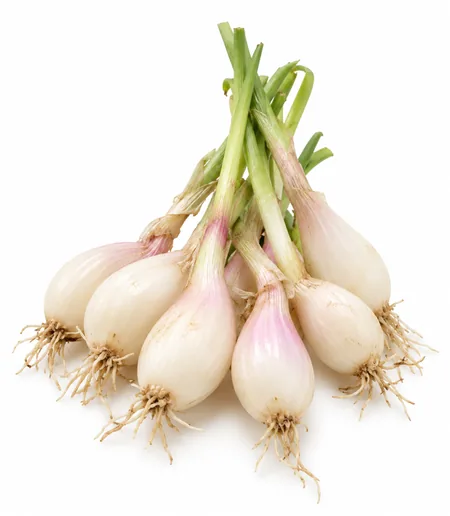
Rakkyo (Chinese Scallion)
Rakkyo (Chinese Scallion) (염교, 薤菜) is recorded in the Donguibogam as a interior-warming food herb. Its nature is warm and its taste pungent, bitter, associated with the Not specified in the source text meridians. Traditional uses recorded in the text include regulates the middle, stops long dysentery and cold diarrhea, clears water qi. Caution: The text records no toxicity.
Overview
Yeomgyo, the rakkyo, is a pungent bulb that the Donguibogam sets apart from the other strong-smelling alliums with an unusual note: although pungent, it "does not make the five viscera gamy" — it is not a hun (葷, pungent forbidden vegetable) — so Taoist adepts ate it often. The text calls it a "vegetable of immortal's herb," records that it is warm and supplementing, and says it regulates the middle, stops long-standing dysentery and cold diarrhea, and "fattens and strengthens people." It adds that it may be eaten in soup or porridge, or blanched into pickles.
In the Donguibogam
寶鑑
Traditional uses recorded in the Donguibogam
- Regulates the middle
- Stops long dysentery and cold diarrhea
- Clears water qi
Traditional applications recorded in the classical text
- Eaten in soup or porridge, or blanched into pickles
Traditional preparation
Eaten in soup or porridge, or blanched and made into pickles, per the text.
This describes traditional preparation recorded in the classics, not a recommendation for use today. DonguiHub does not provide dosage guidance — consult a qualified professional before using any herb.
Cautions
Frequently asked questions
Why did Taoist adepts eat it?
The text says that although pungent it does not make the five viscera gamy (is not a forbidden pungent vegetable), so ascetics often took it.
How is it eaten?
In soup or porridge, or blanched and made into pickles.
What does "vegetable of the immortal herb" mean?
It is the text's praise: the bulb is warm and supplementing and was valued by those who followed immortal regimens.
Sources
- 『동의보감』 탕액편, 허준, 1613 (원문) — 한문 원문
- 한의학고전DB (mediclassics.kr) — 원문 및 국역 자료 참조