
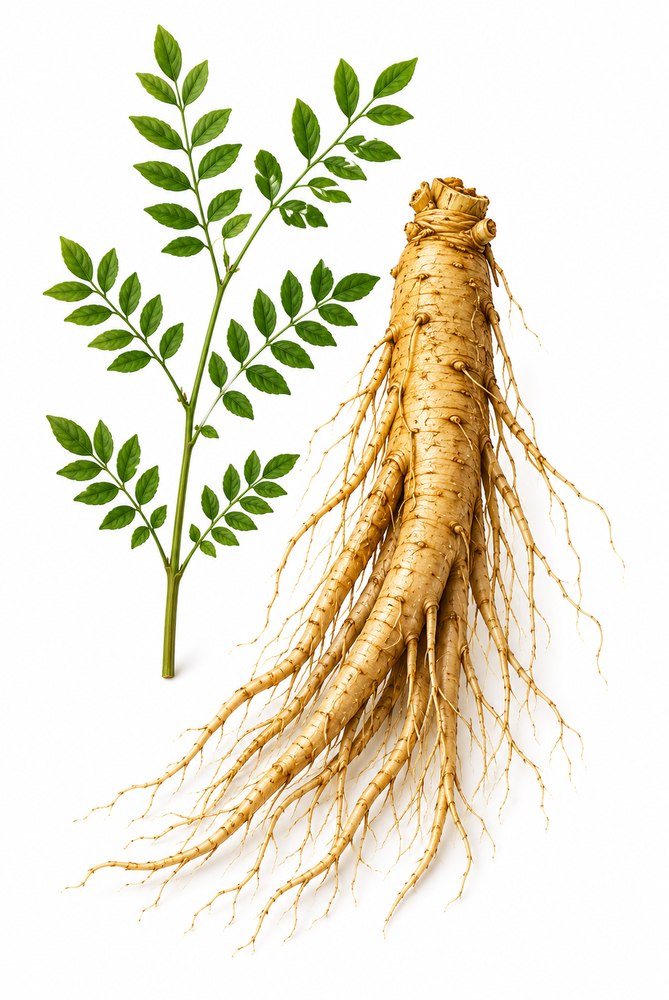
Astragalus Root
Overview
Astragalus is the classic qi tonic for the body's surface. Where ginseng restores deep vitality, astragalus is traditionally used to firm the exterior, reduce spontaneous sweating, and support people who catch colds easily. In Korea it is a familiar ingredient in summer chicken soup (samgyetang).
In the Donguibogam
寶鑑
Traditional uses recorded in the Donguibogam
- Tonifies qi, raises yang
- Firms the exterior, stops sweating
- Promotes urination, reduces swelling
- Supports wound healing
Traditional applications recorded in the classical text
- Fatigue with spontaneous sweating
- Frequent colds
- Poor appetite and loose stools
- Slow-healing wounds
Traditional preparation
Often paired with ginseng or jujube in tonic soups.
This describes traditional preparation recorded in the classics, not a recommendation for use today. DonguiHub does not provide dosage guidance — consult a qualified professional before using any herb.
Herbs Recorded Together in the Text
This summarizes formulas and records of incompatibility and dietary avoidance in the Donguibogam. It is a record of the classical text — not a recommendation, prescription, or medical advice. Amounts in the text (don, bun, etc.) are historical records, not modern recommended doses.
Recorded together in a formulaRecorded as to be avoided
Formulas in which it is recorded
Bojung-ikgi-tang補中益氣湯Astragalus黃芪Ginseng人蔘White atractylodes白朮Licorice甘草Dang-gui (body)當歸身Tangerine peel陳皮Cimicifuga升麻Bupleurum柴胡
治勞役太甚, 或飮食失節, 身熱而煩, 自汗倦怠. 黃芪 一錢半, 人參ㆍ白朮ㆍ甘草 各一錢, 當歸身ㆍ陳皮 各五分, 升麻ㆍ柴胡 各三分
Treats excessive labor or irregular eating with body heat, vexation, spontaneous sweating and fatigue. Astragalus 1.5 don; ginseng, white atractylodes and licorice 1 don each; dang-gui body and tangerine peel 5 bun each; cimicifuga and bupleurum 3 bun each.
Source: Japbyeong-pyeon 《東垣》
夫脾胃一虛, 肺氣先絶, 故用黃芪, 以益皮毛而閉腠理, 不令自汗
Once the spleen and stomach are deficient, lung qi is the first to fail; astragalus is therefore used to benefit the skin and hair and close the pores so that spontaneous sweating does not occur.
《東垣》
Dang-gui Bohyeol-tang當歸補血湯Astragalus黃芪Dang-gui當歸
黃芪 五錢, 當歸 二錢
Astragalus 5 don, dang-gui 2 don.
Source: Japbyeong-pyeon 《東垣》
血虛發熱
Heat arising from blood deficiency.
經曰
Sipjeon-daebo-tang十全大補湯Ginseng人蔘White atractylodes白朮Poria白茯苓Licorice甘草Prepared rehmannia熟地黃White peony白芍藥Cnidium (Cheongung)川芎Dang-gui當歸Astragalus黃芪Cinnamon bark肉桂
治同上. 又治虛勞自汗. 人參ㆍ白朮ㆍ白茯苓ㆍ甘草ㆍ熟地黃ㆍ白芍藥ㆍ川芎ㆍ當歸ㆍ黃芪ㆍ肉桂 各一錢
Treats the same conditions as the preceding formula, and also spontaneous sweating from deficiency-taxation. Ginseng, white atractylodes, white poria, licorice, prepared rehmannia, white peony, cnidium, dang-gui, astragalus and cinnamon bark, 1 don each.
Source: Japbyeong-pyeon 《海藏》
黃芪建中湯ㆍ八物湯, 合爲一方. 治氣血俱衰, 陰陽幷弱, 法天地之成數也
It combines Hwanggi-geonjung-tang and Palmul-tang into one formula. It treats decline of both qi and blood and weakness of both yin and yang, modelled on the completing numbers of heaven and earth.
《海藏》
Cautions
Frequently asked questions
How is astragalus different from ginseng?
Both tonify qi, but tradition assigns them different territories: ginseng restores deep, foundational energy, while astragalus strengthens the exterior and is often used preventively.
Why is astragalus put in samgyetang?
Its traditional role of augmenting qi and firming the exterior made it a natural addition to Korea's summer restorative chicken soup.
Sources
- 『동의보감』 탕액편, 허준, 1613 (원문) — 한문 원문
- 한의학고전DB (mediclassics.kr) — 원문 및 국역 자료 참조